
Ask This Old House S25E7: A Kansas City BBQ Smoker, 25 Years of Trees, and Picking Out a Tree
Mauro Henrique repaints a rusty Kansas City offset smoker with 2,000-degree paint, the crew looks back at 25 years of trees, and Jenn Nawada picks and plants a Japanese snowbell.
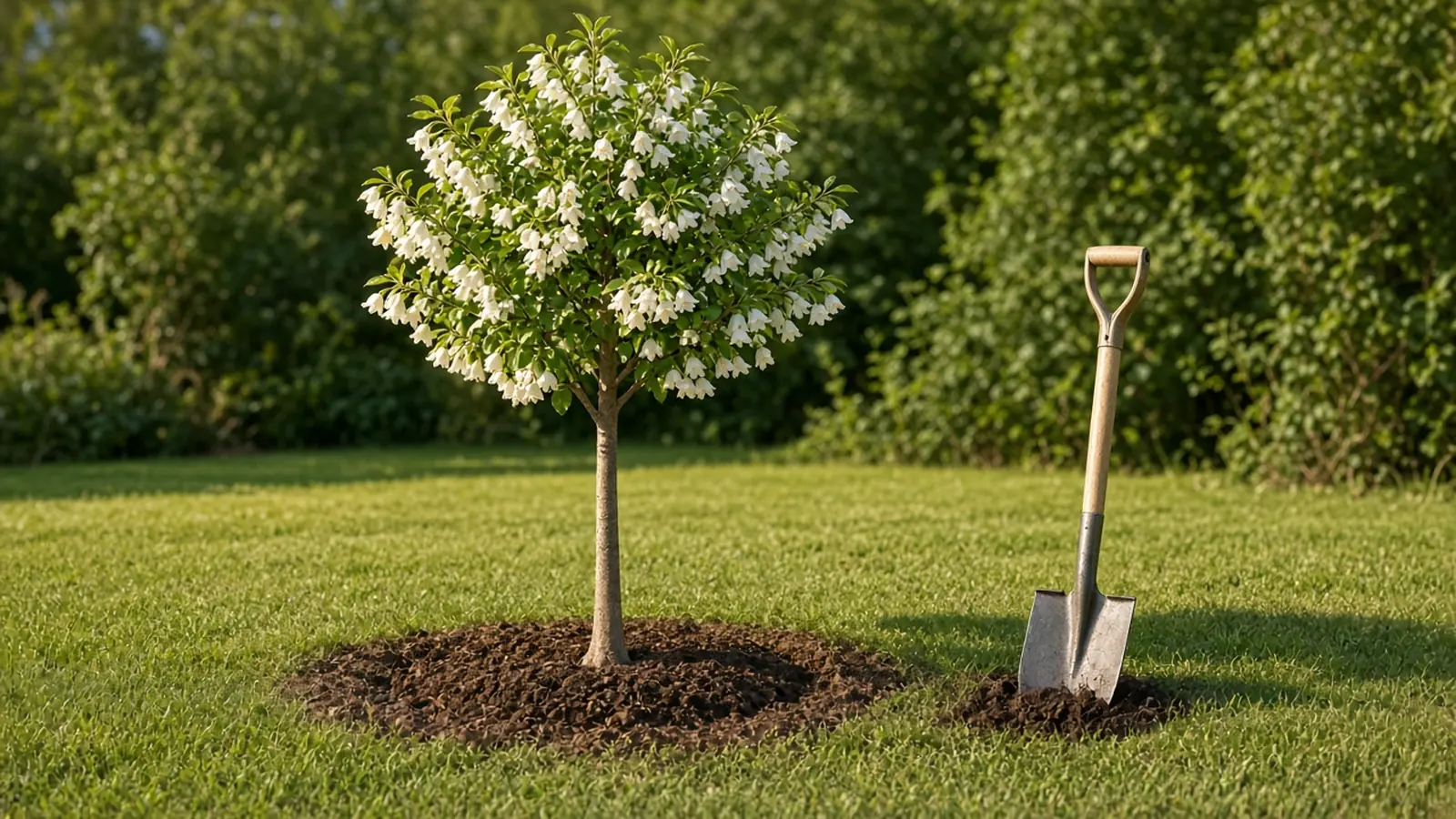
Season 25, episode 7 of Ask This Old House spends the whole half hour outdoors. Paint expert Mauro Henrique goes to Kansas City, which he calls one of the barbecue capitals of the world, to help a competition cook named Mike and his son Brendan bring a rusty offset smoker back. Then Kevin O'Connor sits down with landscape contractors Jenn Nawada and Lee Gilliam to look back at 25 years of trees on the show. Finally, Jenn helps a homeowner named Tara replace a front-yard tree that died in a drought. PBS titles the episode "BBQ Smoker; Picking Out a Tree," lists a premiere of November 12, 2026, and a runtime of 23 minutes and 42 seconds.
A Kansas City smoker that is starting to rust
Mauro says Kansas City has over 100 barbecue joints, and the culture extends past the restaurants into national competition. Mike says they got the smoker about a year ago, and he guesses it is 20 or 30 years old. It is starting to rust out, and he wants to clean it up so it keeps lasting. Brendan says how it works is a question for his dad.
Mike's walkthrough: it is an offset smoker. Coals go in the firebox, and dampers on the front control the airflow into the coals to get the fire going. The heat comes up through the cook chamber, where a baffle helps control it, with the meat inside, water pans underneath, and a vent stack on top. They have used it in competitions around the state.
Mauro gives three reasons for the rust. Leaving it out in the weather is one. Oxidation from moisture and oxygen is another. The third is scraping out debris, which takes the surface down to bare metal, and that metal starts to rust. The inside of the cook chamber is not part of the job. Mike says grease and smoke build up a layer of creosote there, and he scrapes and cleans it out at the end of each year himself.
Setting up in the rain
Mauro's first step before any prep is a pop-up tent, so they work in the shade. It ends up mattering because it rains. A tarp goes down to protect the floor, and Mauro cuts up cardboard boxes he found in Mike's garage to mask off areas he does not want painted. The family dog, Stormy, supervises. The This Old House episode page lists the rest of the gear: a blue tarp, cardboard, a metal wire brush, a metal scraper, N95 masks, goggles, a wet/dry vac, sandpaper, a sponge, dish soap, a hose, a bucket, and high-heat paint.
- Wire brush the edges. For the hard-to-reach edges, Mauro holds the wire brush at a slight angle and presses down.
- Scrape the flats. On flat surfaces he uses the bevel on a five-in-one tool, which he calls his first tool whenever he starts to paint, as a scraper. Brendan asks how deep to go. Not too deep, Mauro says.
- Sand with 220. Mike asks about grit and whether he could use an orbital sander. Mauro uses 220 just to smooth the surface, and says you could use an orbital, but by hand you get a better result close to the edges.
- Wash, then rinse. All the grease has to come off so the paint sticks. They wash it, then do a second round with clean water to get all the soap off.
Picking a high-heat paint
Mike says that a couple of years ago he repainted an older grill and the paint started flaking off after two or three cooks. Mauro's point is that a grill needs high-heat paint, and the rating matters. He lines up three cans rated to 600, 1,200, and 2,000 degrees, and says the higher you go, the more protection you get. Mike says the firebox can get up to 1,000 degrees. Mauro says 1,200 is too close, so they go with the 2,000-degree paint.
- Distance. Brendan asks how close to spray. Hold the can about 5 to 6 inches off the surface and give it a full press.
- Overlap. Make a pass, come back, and overlap each pass by 50%.
- No stop and go. Mike asks how to prevent drips. Once you start at one end, Mauro says, you go all the way to the end. If you stop, you create a drip.
- Two coats. The first coat sits about an hour to an hour and a half, then the second and final coat goes on.
Mike says it looks great and should last quite a while now. They pay Mauro in Kansas City barbecue, and he asks for it to go. More of Mauro's work is on the painting topic page.
Twenty-five years of trees
Kevin's setup is that people think of Ask This Old House as house calls inside homes, but the crew loves the outdoors just as much, especially trees. The reel runs through an Aristocrat pear, a threadleaf Japanese maple, Lee's arborvitaes, a kousa dogwood that Roger Cook notes has a beautiful white flower in June, a dwarf ginkgo, and a visit to a bonsai collection. There is the Cherry Blossom Festival in Washington, D.C., where a man in the clip says over 3,000 trees were sent to the United States as a gift from Japan. Roger appears again and again: explaining that you need to know how tall a tree gets at maturity, how wide, and how much sun it needs; moving about five tons of root ball and tree with a tree spade; cutting out a root that runs against a trunk because it would girdle the tree; and pruning a crabapple, which he calls a vigorous grower.
Back at the table, Jenn says a tree sets the space from a design perspective and can give you shade and privacy. Lee calls it a conversation piece. Jenn adds the anticipation of the spring bloom after a long, hard winter.
On the questions they get, Lee says homeowners want to know what color it will be and how big it will get. His follow-up is what color they want, and the cautions are that it cannot go too close to the house and you have to watch out for power lines. Jenn's checklist is the location and space, the mature height and spread, and the hardiness zone, including whether it will take a drought or a hard winter, because it is going to be there forever. She says planting too close to the house is a common mistake: it is a concern if a fire ever happens, and it can invite animals. Sometimes people do not want to wait because a tree seems so tiny at first. Kevin's version: misplace a hosta, no big deal; put the wrong tree in the wrong place, and Lee says you are in trouble. Lee's other no-no is fabric, which he says does not let the tree get water.
Then favorites. Lee picks the Japanese maple, for its movement and its maroon or green color, and calls it the diamond of the yard. Kevin picks the redbud, cercis canadensis, his wife's favorite and the namesake of their dog, Cercis, plus a European beech for its copper color and long, sloping arms. Jenn supplies the word pendulous. She says it is hard for her to choose, but names dogwoods, cornus florida, that bloom at the start of the season, plus evergreens and trees picked for foliage. The parrotia, a Persian ironwood, is the one they planted for Roger. Kevin says Roger planted thousands of trees over his career. Jenn guesses hundreds of thousands, and says Roger's tree is thriving. More planting episodes are on the landscaping topic page.
A front yard that lost its privacy
Tara's tree died in a drought a few years ago. They had it taken down expecting to replace it quickly, and that did not happen. What she did not realize was that the tree gave the sitting room its privacy. Now the room is open to the street.
Jenn lays out what to think about before shopping:
- Accessibility. How will the tree get there? Sometimes it is out back behind a fence. Here there is a clear shot from the street.
- Placement. The old stump is off center from the bay window. Jenn wants the stump out, the new tree on the middle line of the bay windows, and pulled out a little.
- Surroundings. What will complement the other plants, and what is overhead. There are wires running to the pole in the street.
- Evergreen or deciduous, flowering or not. Tara wants lots of flowers, which narrows it down.
- Understory size. Jenn wants an understory tree, about 15 to 20 feet. Not a sugar maple, oak, or Norway spruce, which she says would dominate the area.
Rather than settle it on paper, they go to the nursery. Tara says she is a very visual person.
At the nursery
The episode page says the tree came from Lovell's Florist and Nursery in Medfield, Massachusetts. Andrew walks them through the understory section.
- Kousa dogwood, or Korean dogwood. Andrew would pick a kousa for that spot because it stays a little smaller. The flowers get big and will cover the tree as it matures. Jenn says it is called the Father's Day tree because it usually blooms around Father's Day. Tara likes it but wants something denser.
- Okame cherry. Andrew's favorite, and one of the kinds you see in Washington, D.C. Small pink flowers in very early spring, early April, by the thousands. It will be taller than wide but get 10 to 12 feet wide eventually.
- Kwanzan cherry. Another pink cherry that flowers a bit later, with big pink double flowers. Tara wants something a bit broader.
- Japanese snowbell, styrax japonica. Before the flowers open, Jenn says, they hang like little bells. She likes how tight the branching structure is and thinks it will give great coverage for the bay window.
Tara picks the snowbell. The episode page's summary paragraph says a flowering cherry, but the transcript and the page's own list of what was planted both say Japanese snowbell. Jenn notes that nursery trees get tangled up, so after planting you untangle the branches to send them in the right direction and avoid crossing branches.
Planting the snowbell
Jenn moves the spot a couple of feet back from the old stump and centers it on the bay window. Tara says that gives her the privacy she wants. First the stump comes out, roots and all, so the new tree has room to grow, and since the machine is there, it digs the hole too. The episode page lists an excavator, shovels, and wire cutters, and credits Kelstrom Landscape with additional landscape help.
- Check the depth. Jenn lays her shovel across the hole as a level line, measures the root ball's height against it with her finger, and checks the hole. It should be at the proper height once the tree rolls in.
- Tip and spin. They tip the tree, grab the bottom of the root ball, and pivot it slowly so it drops into the hole. Tara checks that it is centered.
- Strip the root ball. Jenn's friend Tommy brings wire cutters to cut off the wire basket, and then the burlap gets peeled off.
- Find the root flare. Scrape back to where the bottom of the trunk meets the top of the root ball. That flare should not be buried.
- Fertilize and water before the rest of the backfill. Starter fertilizer goes around the tree, and Tara fills the hole with water to soak in first. The episode page names Espoma Bio-Tone Starter Plus.
- Mulch flat, not a volcano. Mulch goes around the tree, and the trunk wrap comes off. Jenn says the mulch volcano you see piled against trunks in so many yards is detrimental to the tree. Keep it flat, in what she calls a tree saucer, which holds water in instead of letting it run off. The page lists Organic Premium Dark Mulch.
- Water in. Let the water run until it starts to puddle, let it soak back down, and repeat a couple of times.
Tara loves that it is centered and gives her the privacy she wanted. Jenn's homework: go around the tree, loosen up the crossing branches, and point everything in the right direction. Water twice a day by filling the saucer and letting it soak in, and water the new grass seed over the stump area as well.
DIY Confidence Scale
Repainting a smoker: 3/10. Brush, scrape, sand with 220, wash, and spray. The decisions that matter are a paint rated well above your firebox, which here meant the 2,000-degree can for a firebox that hits 1,000, and spraying end to end without stopping. The creosote inside the cook chamber is a separate job, which Mike scrapes out at the end of each year.
Choosing a tree: 4/10. Jenn's list is the work: access, centering on the window you want screened, wires overhead, flowering or not, and a mature size of 15 to 20 feet for an understory spot. Going to a nursery and looking at branching structure in person helped Tara decide.
Planting a balled-and-burlapped tree: 5/10 with help. Setting the depth, removing the basket and burlap, finding the root flare, and mulching flat are all homeowner tasks. The stump grinding and the digging used a machine, and a tree this size takes more than one person to roll in.
Additional Resources
The previous Ask This Old House hour is the smart privacy film, the smart home look back, and the Santa Fe walkway: Season 25, Episode 6. Every Season 25 episode is on the Ask This Old House Season 25 hub, and the full run is indexed under Ask This Old House. The preview after the credits, holiday season at the barn with Tommy and a Chicago homeowner's handmade toy, plus Richard installing a pot filler at a stove, is the next episode, not this one.
The weekly recap
Get each new recap the day it's posted.
Get each new This Old House and Ask This Old House recap by email, the day it's posted. No spam, unsubscribe anytime.
From the captions
Spotted on the job
Tools, materials, and techniques the episode actually showed or discussed. Names stay generic unless the episode said a brand. A name links to an Amazon search only when it is something a person could buy.
As an Amazon Associate, This Old Recap earns from qualifying purchases.
Tool
DIY-friendly
wire brush
Mauro angles it slightly and presses down to clean rust and grease out of the smoker's hard-to-reach edges.
Tool
DIY-friendly
five-in-one tool
Its bevel works as a scraper on the smoker's flat surfaces. Mauro calls it his first tool when he starts to paint.
Material
DIY-friendly
220-grit sandpaper
Amazon search for 220-grit sandpaper (opens in a new tab)
Hand sanding just smooths the surface and gets closer to the edges than an orbital sander.
Product
DIY-friendly
high-heat spray paint
Rated to 2,000 degrees for a firebox that can hit 1,000. Spray 5 to 6 inches off, overlap 50%, two coats.
Tool
DIY-friendly
wire cutters
Cut the wire basket off the root ball once the tree is set in the hole.
Product
DIY-friendly
starter fertilizer
Amazon search for starter fertilizer (opens in a new tab)
Goes around the tree before watering and backfilling. The episode page names Espoma Bio-Tone Starter Plus.
Technique
DIY-friendly
tree saucer mulching
Mulch stays flat and off the root flare instead of a mulch volcano, so water soaks in instead of running off.
Keep reading
Related recaps
Also about Landscaping
Ask This Old House · S23 E25
Ask This Old House Season 23 Episode 25: Thank You, Roger Cook, and the Persian Ironwood at the Barn
Also about Painting
This Old House · S47 E19
This Old House S47 E19: Needham Victorian Finishes, a 130-Year-Old China Cabinet, and a Front Door Mortise
Also about Painting
Ask This Old House · S23 E16
Ask This Old House Season 23 Episode 16: Stair Treads, Sconce Install, and a Dead Switch That Finally Works
Also about Painting
This Old House · S47 E7