
Ask This Old House S25E6: Smart Privacy Window Film, a Santa Fe Garden Walkway, and 25 Years of Smart Home
Ross Trethewey wires switchable privacy film onto a bathroom window from the attic above, the crew looks back at 25 years of smart home tech, and Jenn Nawada plants a Santa Fe walkway in three heights.
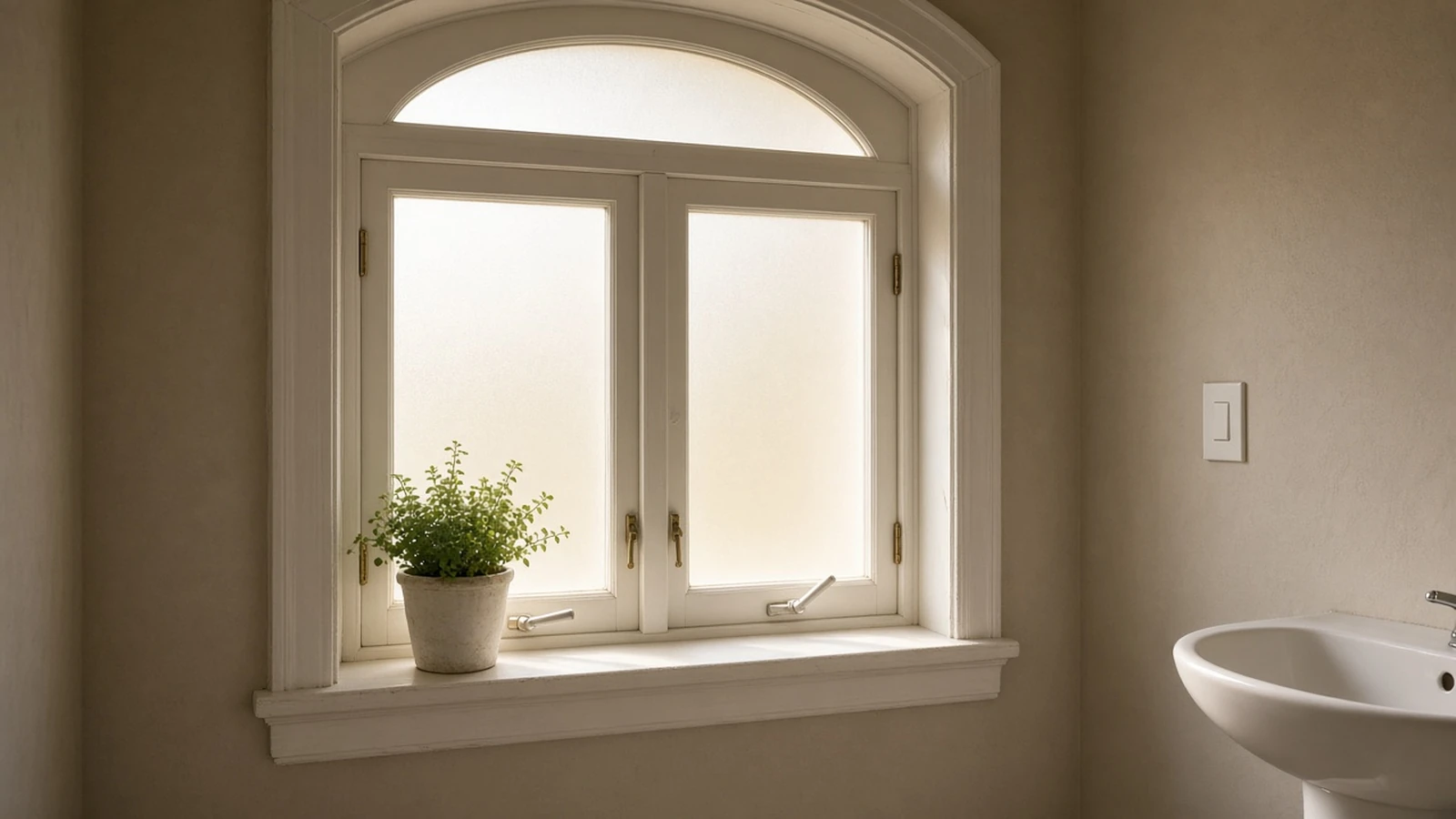
Season 25, episode 6 of Ask This Old House is about getting more out of what a house already has. Kevin O'Connor, Richard Trethewey, master electrician Heath Eastman, and Ross Trethewey look back at how smart home technology has changed over the show's 25 seasons. Ross helps a homeowner named Matt get privacy in a bathroom window without blinds, drapes, or a new window, using a film that goes from frosted to clear at the flip of a switch. Then Jenn Nawada travels to Santa Fe, New Mexico, to plant a walkway for a homeowner named Jen. PBS titles the episode "Smart Window Film; Walkway Garden," lists a premiere of November 5, 2026, and a runtime of 23 minutes and 42 seconds.
Twenty-five seasons of the smart home
The opening is a reel from the archive. A smart door lock that unlocks as you walk up to the door. A solar system that its maker says was inspired by a sunflower. A small robot invented to keep weeds from growing in a garden. A wall that moves. A flexible solar cell screen-printed in a matter of seconds, and a window that might someday be a solar cell. Ross asks Alexa to add milk to his shopping list, and Kevin wants to know when she will go to the store and buy the milk, because he goes through a gallon.
Back at the shop, Kevin asks why this keeps coming up. Heath's answer is that it is intertwined with all the trades now, and you have to adopt it. Ross lists the overlap: smart water valves are a plumbing item, smart lighting is electrical, and robotic mowers are landscaping. Smart home, he says, bridges the gap between the trades. Heath's other point is about apps. One device used to mean one app, and you quickly end up with dozens on your phone. He says that is changing, because a lot of companies now cooperate with third parties. Ross says the milk joke was about 10 years ago, and between smart fridges and grocery delivery, including robotic delivery that he says is around the corner, they are not that far from it. More of the show's connected-home work is on the smart lighting topic page.
A bathroom window that faces the neighbors
Matt has been dealing with this window for a long time. The goal is privacy without giving up the natural light. He has tried a few simple fixes, and drapes in particular gave him trouble: where to hang them, what style, and moisture in a bathroom. The window is an irregular shape, which Ross says makes coverings tough. Matt also likes the window and does not want to tear the house apart. Ross can see the neighbors from where he is standing.
Ross's suggestion is smart glass, which changes from transparent to translucent when you apply an electrical current. He lays out the two versions with the numbers he gives on camera:
- Replace the window. A new laminated smart-glass system is two panes of glass with a smart film in between. That means a new window, casing and all. Ross puts it at about $150 a square foot, probably around $8,000 for this size window. He says that might be a good option in new construction.
- Film on the existing glass. A smart film applied to the inner surface of the glass gives the same benefit and keeps the windows. Ross puts it at about $70 a square foot, about $3,000 installed for this window. He calls that still not insignificant. The windows still operate.
Matt takes the film. The This Old House episode page names the product as PriWatt Film PDLC by Smart Glass Technologies, and says Smart Glass Technologies supplied the installer who measured the window, installed the film, and made the low-voltage connections.
How the film works
Ross has a tabletop demonstration in the basement. With power applied, the glass is transparent. Take power away and it goes back to its native state, which is frosted. The technology is called PDLC, polymer dispersed liquid crystal. Ross compares it to a shutter: the liquid crystals sit one way, and when current is applied they flip and go horizontal so you can see through. Matt's version of the user manual is that when they want to take a shower, they turn it off.
The wiring is the hard part, Ross says. Line voltage, 120 volts like household power, comes into a switch. From the switch it goes to a transformer that knocks it down to 48 volts AC, and that low voltage goes to the glass through a bus bar with a positive and a negative side. The usual challenge is where the switch and transformer go. Often that means cutting drywall or putting the switch next to an existing one, with the transformer in the vanity or somewhere like it, and the wires have to be concealed. Matt's house has an unfinished attic directly above the bathroom, with power that can be tapped. So the switch and the transformer can go up there, and the low-voltage red and black wires can come down the wall stud cavity to the window.
Matt asks if that means going into the attic to turn it on. It does not. A battery-operated smart switch that sticks to the wall talks wirelessly to the switch in the attic, so it can go anywhere in the bathroom with no more cuts in the drywall. The episode page names a Lutron Claro Smart Switch as the wall switch and a Lutron Pico Paddle Remote Wall-Mount Kit as the remote, and it says a licensed electrician was needed to install the transformer and the wall switch.
Attic wiring, then the film
Upstairs, electrician Andrew is almost done. They got lucky, Ross says, with an existing switch in the attic that already had power and controls the lights. Andrew runs line voltage in NM cable to the new switch that will control the glass, and from there the 120 volts goes to the transformer, which drops it to 48 volts, the same as the tabletop display. Then Ross goes down to the bathroom, and the two of them snake the low-voltage cable through the wall between the bathroom and the attic until Andrew has the end.
The installer, Jordan, starts with the glass. He scrapes it with a razor blade and isopropyl alcohol and wipes it down well with a microfiber towel, because nobody knows what is on that glass and the film needs good adhesion. He holds off cleaning the top pane, because cleaning it would drop contaminants on the two panes they just finished. Those two get film first.
- Dry fit. Jordan lines the film up in the window frame and tapes it in place to hold it while they get situated.
- Peel a few inches at a time. Red tabs hold the clear protective layer over the adhesive. He peels the first couple of inches, avoids touching the sticky side, and keeps going a few inches at a time. Ross says the neighbors are already disappearing.
- Template the round pane. The film only comes in squares or rectangles, so Jordan makes a template for the round piece of glass.
Matt hits the wall switch and says he loves it. Ross has a short list of rules. The manufacturer wants the film off four hours a day, and Matt figures bedtime covers that. Jordan still has to run silicone sealant around the edges, which will be white all the way around, to keep water and moisture out. After that sets, 24 hours later, Matt can peel off an inner film, which will make the glass even clearer when it is on. The casement windows stay fully functional, but Ross asks Matt to close them if it starts to rain so the inner film does not get too wet. Matt goes back and flips it one more time. More glass work is on the windows topic page.
Santa Fe: a walkway with nothing growing along it
Jenn says she has never been to Santa Fe before. Jen and her family finished the inside of the house, and the outside needs a lot of love. The walkway leads to what Jen calls the margarita hut. In New Mexico, she says, people spend a lot of time outside, and a lot of places in Santa Fe have outdoor areas like this one. The hardscaping is beautiful. The landscaping is struggling, and Jen wants a path that leads people to the hut.
Jenn likes what is already there: rocks, agave, and pine trees that make a canopy over the walkway. To marry the canopy and the hardscape, she wants understory plants, something around five feet, something around three feet, and ground cover along the path. Jenn asks about water. Jen says her daughter's boyfriend put in the rock border along the path, and in monsoon season everything rushes down. Without the border holding things, she says, they would basically have a mudslide. Still, she thinks the first order of business is to remove it and add plants, and Jenn gets shovels out to pry up the rocks and pull a few plants.
Three heights of plants
Jenn picked plants after talking with nurseries and other local landscapers. The episode page credits McCumber Fine Gardens for local landscape help and plants, and says more plants came from Jackalope in Santa Fe. She sorts them by height.
- Ground cover, six inches to a foot. Lamium 'White Nancy' has a shiny, silvery leaf and white flowers, and it spreads. Vinca, or periwinkle, has creamy leaf margins and purple flowers. Jenn wants these where there is a little erosion and along the sides of the path, to keep it low and hold the soil. The episode page warns that vinca is an extremely aggressive grower and can take over an area. It recommends slicing around the containment area with a sharp spade or edger once or twice a year.
- Mid-height. Columbine, or aquilegia, can be cut back after it blooms and dies and will rebloom, so there is a second set of flowers from spring into summer. Catmint, or nepeta, is a clumping variety that Jenn says blooms purple pretty much all season. The episode page names it as 'Purrsian Blue'.
- Grasses, for movement. Prairie dropseed is not as sharp as a lot of grasses, and Jenn says it is native to the area. Blue grama, which Jenn learned about visiting Wyoming, has seed heads that she says look like eyelashes in the fall. The episode page names it as 'Blonde Ambition'. For height, feather reed grass 'Karl Foerster', or calamagrostis. Jenn says it gets five to six feet. The episode page says four to six feet.
Jen says most people do not know how much it snows at that altitude. Jenn says all of these are perennials. Everything but the vinca, which is semi-evergreen, dies to the ground and goes dormant for the winter. You cut them back in the fall. Some people leave grasses up for bird habitat, but out here Jenn thinks you might cut them back because of fire, since they could be ignition.
Planting into hard ground
The plants get set out along the walkway first, then the digging starts. Jenn's method:
- The hole. Dig about twice as wide as the pot. For depth, go to where the top of the plant is and leave it a little above the soil, because mulch is coming. Too high is better than too low.
- Out of the pot. Squeeze the edges at the base, and tap it if needed. If the roots are packed together, break them up gently with your thumb and forefinger so they grow out instead of around.
- Amend. The ground is hard. Jenn mixes potting soil into the existing soil for aeration and moisture retention, plus a starter fertilizer. The episode page names FoxFarm Happy Frog potting soil and FoxFarm Happy Frog steamed bone meal. Break up the chunks as you backfill.
- Mulch. Pecan mulch from the nursery, which Jenn says is organic and locally sourced from New Mexico farmers. The episode page says it is made by Soilutions. About two inches around everything, pulled away from the base of each plant so it is not buried. When the hot sun discolors it, lightly top-dress with a couple more bags.
- Water. A diluted vitamin solution on every plant for a boost in its new home. The episode page names SUPERthrive and says it reduces the risk of transplant shock.
Jenn's advice for after she leaves is an irrigation system, so the water goes directly to the plants and helps with conservation. Then patience. She says plantings take about three years: the first year they sleep, the second year they creep, and the third year they leap. By the second or third year, she says, Jen will have a lush garden that also helps with erosion control. After a big rain, pull the mulch back up. Jen pays Jenn in a margarita, in the margarita hut. More planting episodes are on the landscaping topic page.
DIY Confidence Scale
Applying smart privacy film: 6/10 for the film, and not DIY for the power. Cleaning the glass, dry fitting, peeling a few inches at a time, and templating an odd shape are patient work. The episode page says a licensed electrician installed the transformer and the wall switch. Ross's install was easy because an attic sat directly over the window. Without that, plan on drywall cuts and somewhere to hide a transformer.
Planting a walkway: 2/10. The skills are a shovel, a soil amendment, and the right height for the root ball. The harder part is picking plants that fit the climate. Jenn picked for dry, high-altitude ground with snow and monsoon rain, and she was clear that it takes three years to fill in. If you plant vinca, plan to edge it.
Additional Resources
The previous Ask This Old House hour is the gutter demonstration, the mini-split Wi-Fi kit, and the stucco foundation skirt: Season 25, Episode 5. Every Season 25 episode is on the Ask This Old House Season 25 hub, and the full run is indexed under Ask This Old House. The preview after the credits, Mauro in Kansas City with a homeowner's barbecue smoker and Jenn at a nursery choosing a front-yard tree, is the next episode, not this one.
The weekly recap
Get each new recap the day it's posted.
Get each new This Old House and Ask This Old House recap by email, the day it's posted. No spam, unsubscribe anytime.
From the captions
Spotted on the job
Tools, materials, and techniques the episode actually showed or discussed. Names stay generic unless the episode said a brand. A name links to an Amazon search only when it is something a person could buy.
As an Amazon Associate, This Old Recap earns from qualifying purchases.
Product
Pro-only
PDLC smart privacy film
Film on the inside of the existing glass is frosted with no power and clear when 48-volt power is applied. The episode page names PriWatt Film PDLC.
Tool
DIY-friendly
razor blade scraper
Jordan scrapes the glass with a razor blade and isopropyl alcohol before the film goes on, so it gets good adhesion.
Material
DIY-friendly
microfiber towel
The glass gets wiped down well with a microfiber towel after scraping.
Material
DIY-friendly
silicone sealant
White silicone goes around the film edges to keep water and moisture out. The inner film comes off 24 hours later.
Product
DIY-friendly
wireless smart switch
A battery-operated switch sticks to the bathroom wall and talks to the switch in the attic. The episode page names a Lutron Pico paddle remote.
Material
DIY-friendly
potting soil amendment
Jenn mixes potting soil and a starter fertilizer into hard Santa Fe soil for aeration and moisture retention.
Material
DIY-friendly
pecan mulch
About two inches of locally sourced pecan mulch goes around each plant, pulled away from the base.
Tool
DIY-friendly
garden spade
Listed on the episode page for planting. Jenn digs each hole about twice as wide as the pot.
Keep reading
Related recaps
Also about Windows
Ask This Old House · S24 E10
Ask This Old House Season 24 Episode 10: An Idaho Backyard Makeover for Community Dinners, Plus Two Window Wells That Finally Fit
Also about Windows
This Old House · S47 E6
This Old House S47 E6: High Schoolers Building Homes, Updated Electrical Codes, and Tom's Antique Vanity Gambit
Also about Windows
This Old House · S48 E6
This Old House S48 E6: Essex County Colonial: Removed, Reused and Reclaimed
Also about Windows
This Old House · S47 E15