
Ask This Old House Season 23 Episode 16: Stair Treads, Sconce Install, and a Dead Switch That Finally Works
Mauro Henrique teaches a homeowner to paint unfinished stair treads and a handrail, Heath Eastman restores buried sconce boxes above a fireplace, and the crew empties their bags for a tool talk. One job finishes a surface the homeowner already started; the other recovers lighting a previous owner covered up.
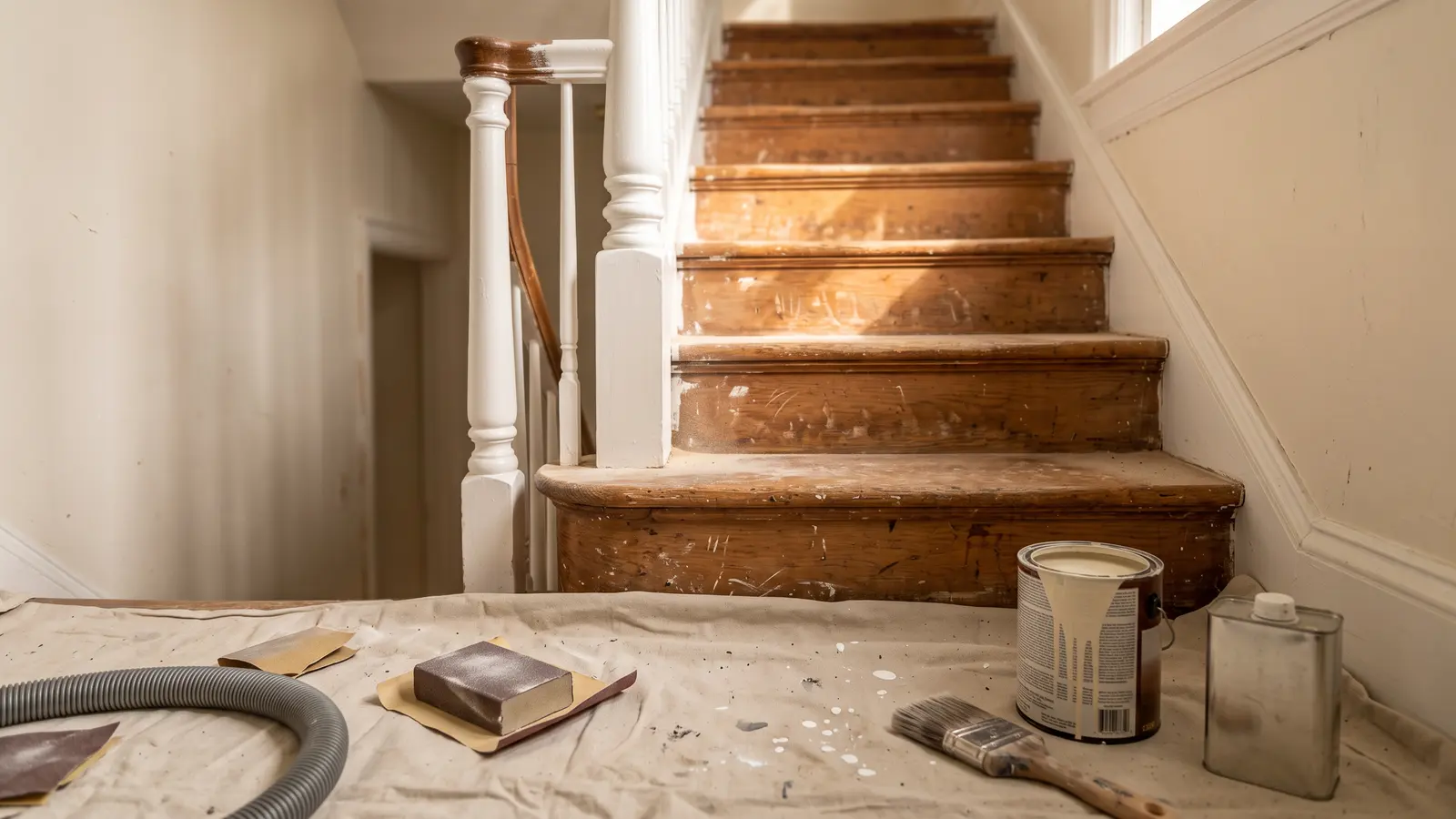
Season 23, Episode 16 of Ask This Old House sends Mauro Henrique up a staircase that was already half painted, Heath Eastman into a living room where a wall switch has controlled nothing for years, and the rest of the crew to a table to empty their tool bags. The two house calls do not look related. One is a finish schedule; the other is a wiring investigation. What they share is the moment when a homeowner stops guessing and starts confirming.
Stair Treads: Paint Is the Last Step, Prep Is the Whole Job
Homeowner Alex bought the house about six months ago and has two dogs, one 110 pounds and one 75. The treads are bare wood, and the dogs have already left scratches on them. The long-term plan is a seagrass runner, but that is a someday project. Right now the finish is the project. Alex already painted the trim on the stairs himself, but he is not sure how to handle the treads and handrail.
Mauro splits the materials immediately, which is the part worth writing down. The handrail and newel post get a durable trim paint. The treads get a floor paint, because a tread takes foot traffic and a handrail takes hands. Alex wants white, and he wants high gloss. Mauro agrees on the gloss, noting it is easy to clean and scuff-resistant on a surface that gets walked up and down all day.
Then comes the prep, and it is not short. Mauro uses 220-grit on the handrail and newel post, then 120 followed by 220 on the treads. Sanding does two jobs: it cleans the surface and it opens the grain so primer has something to grab. Alex gets the edges at the top and bottom of each run while Mauro works the field. Everything gets vacuumed before any liquid comes out of a can, because a drop of primer on a finished floor is a problem you keep.
Mauro chooses an oil-base primer here. His reason is specific: better adhesion on that wood and on a surface that will see constant foot traffic. He also covers the cleanup distinction, since it trips people up. Oil-based products clean with paint thinner. Water-based products clean with warm water and a little soap. The primer he is using dries in about an hour, which is what makes the rest of the schedule possible.
First-coat painting runs top to bottom: handrails and newel first, then the treads. The treads get brushed rather than rolled, and Mauro wants a thick first coat for an even finish. After that, he says something the edit could easily have skipped. The first coat is dry, but it is not cured. The second and final coat waits until tomorrow, after a light sand and another vacuum. Tonight, socks only on the stairs, and the dogs stay off.
Two coats across two days is exactly the kind of schedule television compresses into a single visit. This is the same rhythm Mauro ran on the wainscoting job back in Episode 14, where masking and prep ate the segment and the airless sprayer got the payoff. Same lesson, smaller staircase.
Tool Talk: A Scribe, Some Earmuffs, and a Sod Cutter You Use Standing Up
The crew gathers for a short segment on tools they have actually been reaching for, and it is best read as field preferences rather than a product roundup. Each item solves one repeated annoyance.
Nathan Gilbert starts with a small scribe tool. It has offsets marked from 1/16 inch up to a half inch, so he can lay it against stock and draw a consistent line. His main use is outdoor trim, where he sets a 1/4-inch reveal on a jamb and runs the trim against it. It also has a center finder: set the pencil in the notch, bring the tool to the material, turn it, and it lands dead center on 3/4 stock without doing the math on a tape. A magnet on the back lets him hang it in the truck or keep it on his belt, and it will grab drywall screws through joint compound. Inexpensive, he says, and accurate.
Mark McCullough brings electronic earmuffs. They cancel loud impulse noise but pass conversation through a microphone, which Mark frames as the safety benefit: he can still talk to the person next to him. Kevin O'Connor puts them on, and when he claps, the muffs shut the sound down. That is the whole demonstration, and it makes the point better than a spec sheet would.
Lee Gilliam shows a standing sod cutter. The old method was a jab saw or a box cutter, down on your knees, scoring and trimming. The new tool lets him stand and cut sod like scissors, which is faster and easier on the person doing it. Kevin jokes that Lee lifted it from Nathan's bag. Nathan wants it back by the end of the segment.
Fireplace Sconces: The Switch That Went Nowhere
The third call belongs to Heath Eastman. The living room is lit entirely by floor lamps on a wireless switch with a plug-in module. That setup works, and Heath says so, but the homeowner wants something better. He has noticed that similar houses in the neighborhood have sconces above the fireplace. His house has two evenly spaced patches in the plaster where boxes were buried, and a switch on the wall that does nothing.
Heath kills power, tests the box to make sure there is not a second circuit hiding in it, and pulls the dead switch. Nothing is attached to it. The box does hold wires that look like the old sconce feed. He clips a toner to those wires and walks to the fireplace with the receiver. The tone comes through right at one of the plaster patches, which confirms the run.
The good news is the wire is where he thought. The bad news is he will not reuse it. It is too old and brittle. That means new cable, and it also means a new switch location. Rather than crowd the original box with four other switches in it, he moves the new switch to where the wireless one already sits, so the control stays in the room.
The basement decides how hard this is. This one is accessible, and it has junction boxes left over from a kitchen remodel. Heath taps an existing power source rather than burning a whole breaker on two sconces. Access around the chimney and the ceiling beams is awkward, so he works from the adjacent room instead of trying to fish straight up the fireplace face.
Then he pulls out a trick worth remembering. He takes a fiberglass insulation support tie, the wire that holds batts in the bays, and files an angle onto the end with a pair of cutters until it is sharp. It fits in a drill chuck. He holds it against the baseboard and drills down through the floor, and the homeowner watches from the basement for the tip to appear. The hole is small enough to fit between floorboards, and a little wax putty erases it. What Heath gains is real information: the thickness of the baseboard, the thickness of the plaster, and how many inches he has before the floor joist. He drills up right beside the joist.
Layout is where old-house experience shows. Heath measures each sconce off the mantel individually instead of running a level across both, because an old mantel is not guaranteed to be level. Measure off the mantel and the two fixtures sit at the same height relative to it, which is what the eye reads.
He also chips the plaster by hand rather than cutting it, and finds the original metal boxes still in the wall, along with old newspaper dated 1955. The original boxes would hold the sconces, but he swaps in larger ones, both for the connections and for the room to fish cable. Then it is a fish tape across a couple of studs, wire tied on, and a pull. The sconces go up, the switch goes in, the breaker comes back on, and the switch that did nothing now does something.
What it does not do is finish the wall. Heath patches around the openings and tells the homeowner plainly that old plaster chips when you cut into it, and that putty, touch-up, and paint are his homework. If you have ever watched a fireplace get opened up on this show, you know the pattern. In Episode 12, the fireplace got a sealed gas insert, and the venting and the chimney were the actual story. Here the fireplace itself never changes. The wiring behind it is the job, and the fixture is just the last thing to arrive.
DIY Confidence Scale
Stair treads and handrail painting: 6/10. No permit, no specialty tools, and the skills are modest. What earns the middle score is the schedule and the discipline. You have to sand twice, vacuum twice, prime, wait, sand between coats, and then keep feet and dogs off a dry-but-not-cured surface overnight. Most failed paint jobs on stairs are not application failures. They are patience failures.
Tool Talk: 1/10 as a DIY repair, 8/10 as a buying filter. There is nothing to install or fix in this segment. The useful takeaway is that a tool earns its place when it solves a repeated annoyance, not when it looks clever in a clip.
Sconce installation and circuit work: 2/10. The demo is satisfying and the finished product looks simple, but the job involves confirming a dead circuit, testing for a second circuit in the box, abandoning brittle old conductors, running new cable, tapping an existing source, and making connections that will be hidden behind plaster for twenty years. That is licensed-electrician territory. Watch it, learn from it, and call someone.
Additional Resources
Which would you rather take over: a staircase you started painting and now have to finish correctly, or a switch you have been flipping for years on the assumption it once worked?
From the captions
Spotted on the job
Tools, materials, and techniques the episode actually showed or discussed. Names stay generic unless the episode said a brand. A name links to an Amazon search only when it is something a person could buy.
As an Amazon Associate, This Old Recap earns from qualifying purchases.
Material
DIY-friendly
220-grit sandpaper
Amazon search for 220-grit sandpaper (opens in a new tab)
Mauro used 220-grit sandpaper to sand the handrails and newel post before priming and between coats.
Material
DIY-friendly
oil-base primer
Mauro applied an oil-base primer to the handrails and steps for better adhesion on the stair wood.
Material
DIY-friendly
paint thinner
Mauro said paint thinner is the best way to clean tools and brushes when working with oil-based paints or primers.
Material
DIY-friendly
floor paint
Mauro used floor paint on the stair treads to give them a durable finish for foot traffic.
Technique
DIY-friendly
sanding between coats
Mauro lightly sanded and vacuumed between the primer and paint coats so the next coat would adhere better.
Tool
DIY-friendly
scribe tool
Nathan showed a scribe tool with offsets, a center finder, and a magnet for marking trim and finding center.
Tool
DIY-friendly
electronic earmuffs
Mark demonstrated electronic earmuffs that cancel loud sounds while allowing conversation.
Tool
Pro-only
toner
Heath used a toner and receiver to trace the old disconnected sconce wiring before running new cable.
The weekly recap
Get each new recap in your inbox the week it airs.
One email the week the new episodes are up, with links back to the full write-ups. Confirm once. Unsubscribe any time.
Keep reading
Related recaps
Also about Painting
This Old House · S47 E19
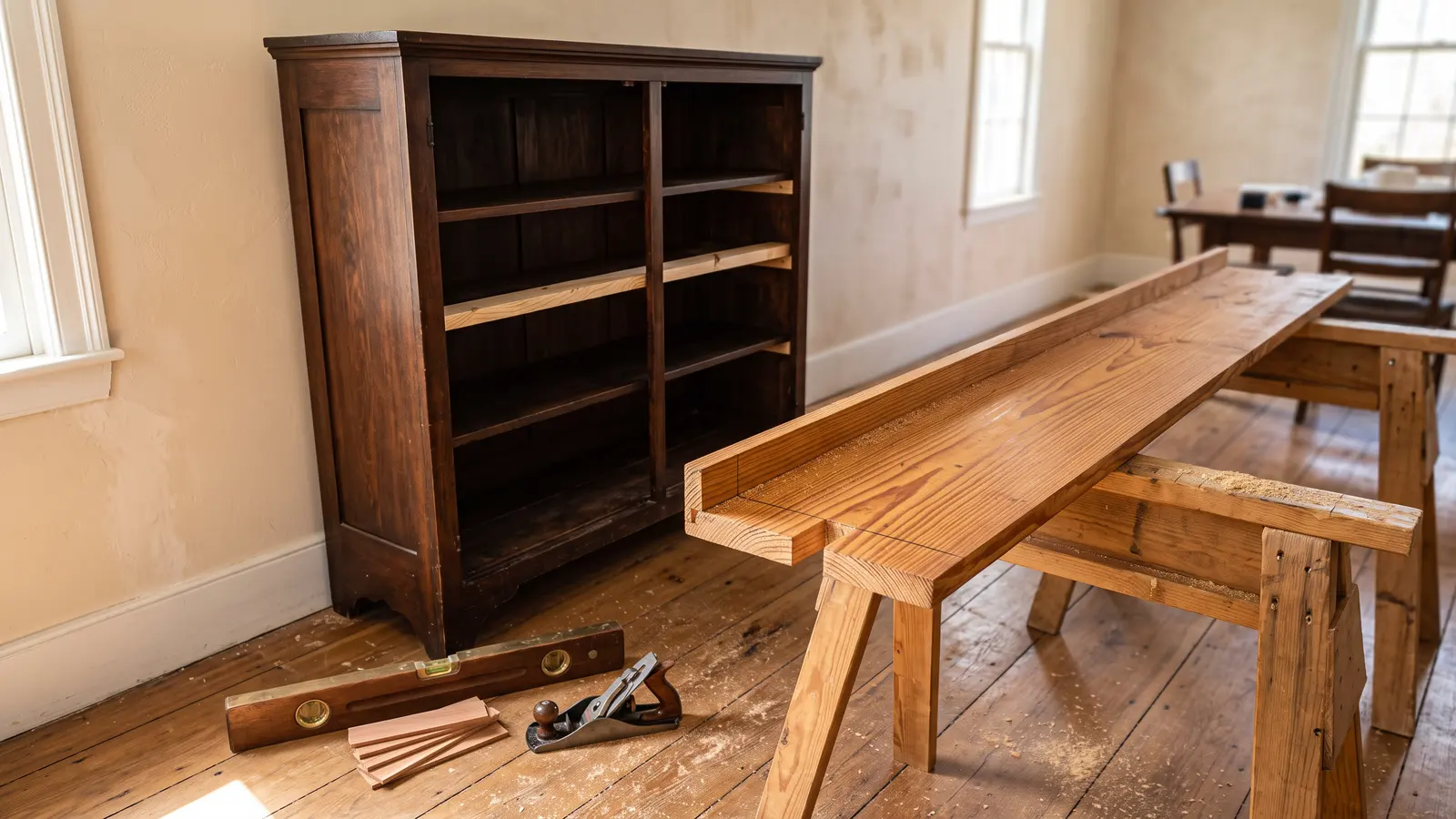
This Old House S47 E19: Needham Victorian Finishes, a 130-Year-Old China Cabinet, and a Front Door Mortise
Also about Painting
This Old House · S47 E18
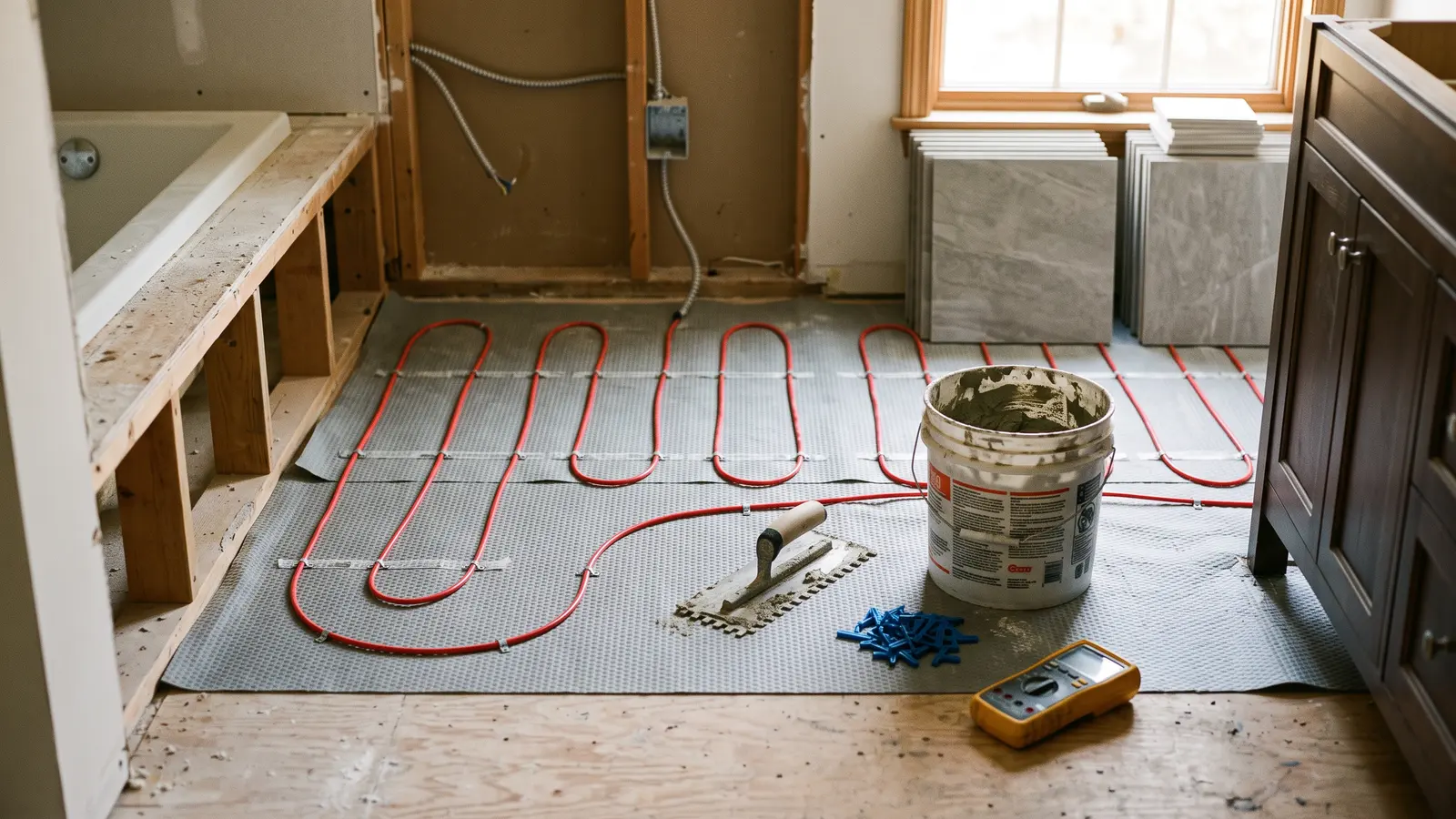
This Old House S47 E18: Heated Tile Floors, Chatham Custom Cabinets, and Bookcases That Hide Ductwork
Also about Painting
Ask This Old House · S24 E24
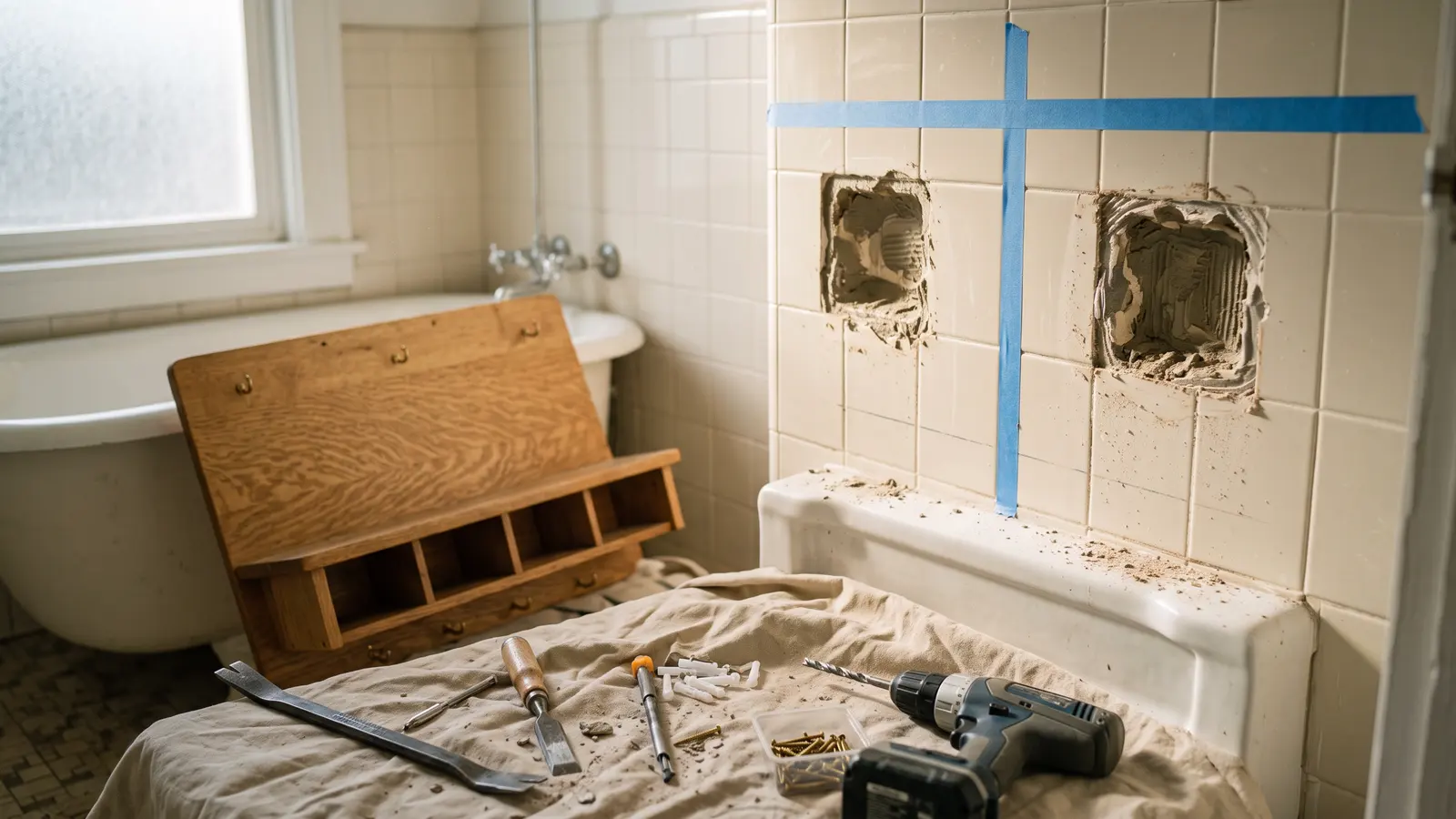
Ask This Old House S24E24: Removing Tile Soap Holders for a White Oak Shelf, and Mauro Matches a Swirl Ceiling
Also about Painting
This Old House · S47 E17