
Ask This Old House Season 23 Episode 20: Electric Bill Investigation, Dethatching and Aerating, and Router 101, or Rob's Winter Spike Becomes a Graph
Lee Gilliam compares dethatching rakes and core aeration timing, Heath Eastman installs a smart energy monitor at a 1875 house to track a winter bill spike, and Tom Silva walks Kevin through router bases, bits, and depth stops. The monitor finds no fault, which turns out to be the useful answer.
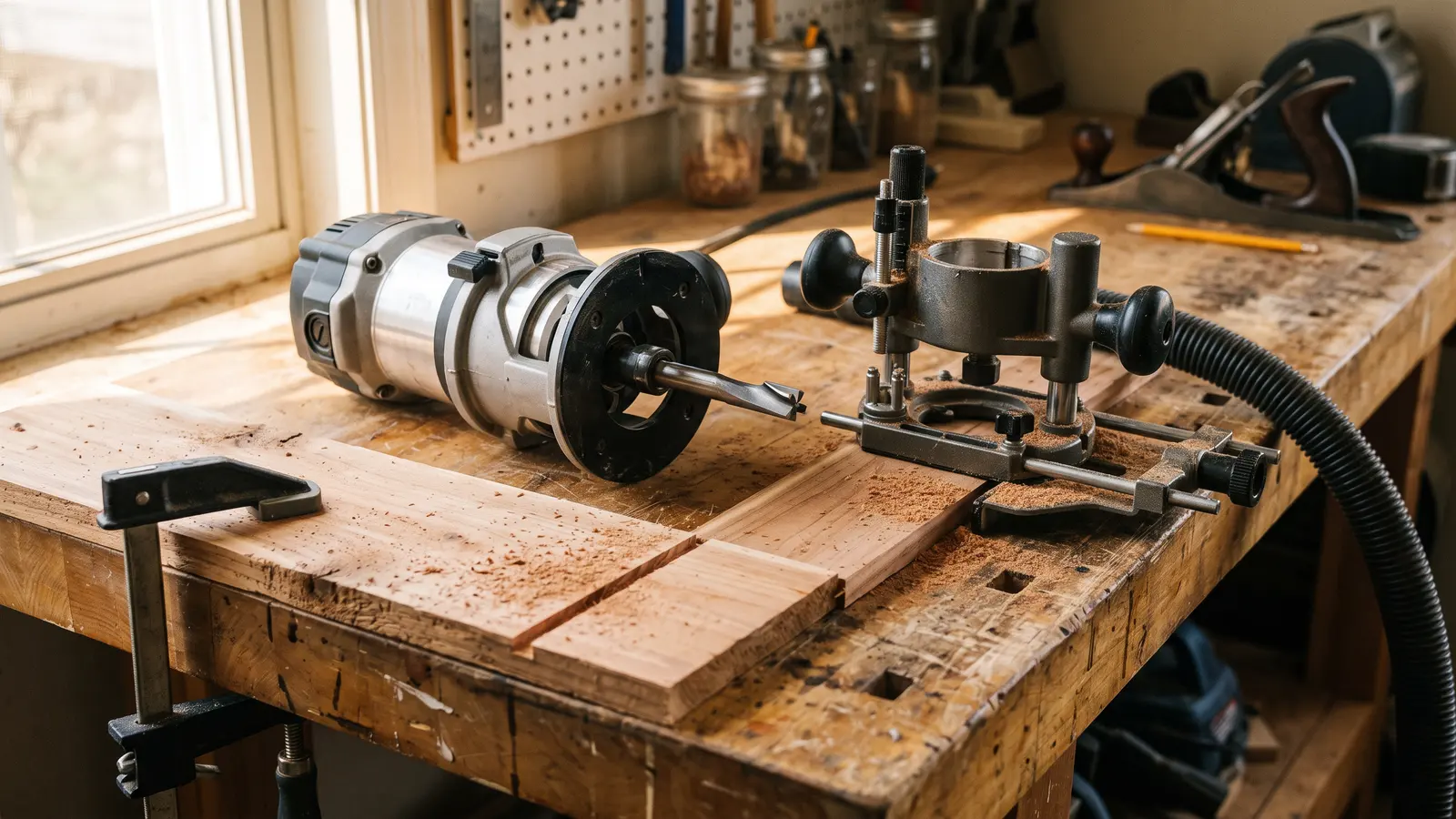
Season 23, Episode 20 of Ask This Old House puts three unrelated jobs in one episode: lawn prep with Lee Gilliam, an electric bill investigation with Heath Eastman, and a router primer from Tom Silva. What ties them together is that nobody starts by fixing anything. Lee pulls a plug of sod to look at the thatch layer, Heath clips current transformers onto feeders and watches numbers instead of guessing, and Tom sets a depth stop before he cuts a dado. Measure, then decide.
Dethatching and Core Aeration with Lee Gilliam
Lee starts with a piece of sod and a knife, peeling back the thatch layer that sits between the green blades and the soil. Kevin calls it last season's lawn laid down, and that is a fair description: dead stems, rhizomes, and clippings that have not broken down. Lee's goal is access. Water, fertilizer, compost, and daylight all need to reach the root system, and a mat of thatch is what stands in the way.
For a small yard, the tool is not the leaf rake most people picture. Lee uses a stiff-tine dethatching rake and works it back and forth through the live grass, dragging material up rather than raking leaves across the top. Kevin tries it, notices it pulling between the blades, and the difference between the two rakes becomes obvious in about four strokes.
For larger properties, they move to a walk-behind dethatcher. Lee describes it as a lot of tines spinning fast, and Kevin admits he rents one every spring and puts his kids behind it. What comes up is a genuinely alarming amount of brown material. Kevin says a homeowner watching this for the first time will think the lawn is being destroyed. Lee's answer is that it is doing exactly what it needs to do, and Kevin's follow-up is that within three to five days the lawn starts coming back.
Aeration gets the same treatment. Lee shows a set of spike shoes that strap onto boots, meant for small properties, then names the tradeoff: spikes poke holes, but they also compact the soil slightly as you walk. He prefers core aeration, where a machine pulls plugs out of the ground and leaves them lying on the surface. Those plugs still hold nutrients, so Lee leaves them. Kevin leaves his too and says they are gone in a week or two.
Timing is the part homeowners ask about, and Lee is specific. Dethatch once, in early spring, and haul the material off. Aerate two to three times a year: after dethatching in spring, again in midsummer, and definitely late summer into fall, followed by overseeding so the seed and water have somewhere to land.
What the segment compresses is the logistics. A power rake and a core aerator have to be picked up, fueled, and run across a yard without scalping a dip or grinding through a sprinkler head. Kevin jokes about needing more kids for three aerations a year, which is a fair proxy for how much lawn area a homeowner is actually managing. On a quarter acre, the rake-and-shoes method is real. On an acre, it is a rental weekend with a trailer.
Heath Eastman and Rob's Winter Electric Bill
Rob lives in a house whose main portion dates to 1875, roughly 150 years old, with two tenants and two meters. The second floor shares heat and Rob's meter; the third floor has its own. The heat is an oil furnace, and almost everything else is electric: ovens, dryers, water heater, and a well pump that feeds all three units. There is a 200-amp main panel, a two-pole 100 feeding the kitchen, and a shop subpanel in the garage.
Rob's problem is seasonal. His winter bill runs close to double his summer bill. He wondered whether the old, slightly rusty panel was the cause. Heath pushes back on that directly. Unless there were a major internal malfunction, the panel would show much more damage than rust, and it is unlikely to be the source of the swing. He also notes that rate increases and faulty meters happen, but they are less likely than the simpler explanation: added electric loads, and equipment working harder when it is cold.
The analog meters turn out to be useful diagnostic tools. Heath watches the dials spin, then has Rob kill the kitchen panel. The main meter slows noticeably. Then they open the main breaker, the meter stops, and the tenant meter keeps creeping along with nobody home. That tells Heath the separation is correct and nothing is cross-fed, which is a more useful result than it sounds.
The install itself is the part to be careful about. Heath brings a monitor with a head unit, an antenna for Wi-Fi, two main current transformers for the incoming feed wires, and up to sixteen small CTs for individual branch circuits. Before any of it goes in, the power is disconnected outside, the panel cover comes off, and Heath verifies with a multimeter. The main CTs have direction arrows, and Heath faces them toward the breaker so the readings come out right. Powering the monitor requires a two-pole 15-amp breaker, which means two open spaces. Without them, something else has to move or share.
If you have been following the mini split thread from earlier in the season, this is where it pays off. Episode 19 covered mini split maintenance, and here the mini split shows up as one of Rob's three biggest loads, broken out across two CTs so Heath can watch each phase. Equipment you depend on for heat in January is going to show up on the bill in January.
Two months later, the data is in. The monitor matches the utility bill almost exactly, which is the answer nobody wants but is the honest one. Three culprits: the mini split, the well pump, and the electric water heater. Heath's suggestions are a hybrid heat pump water heater to cut the water heating load, a reminder that the well pump replaces a water and sewer bill for three families, and recognition that a heat pump at 25 degrees is working far harder than it does in June. Rob has already reached out for a solar estimate.
A homeowner can absolutely install the app-facing side of a system like this and read the graphs. Clipping CTs around feeders and landing a two-pole breaker inside a panel is licensed electrical work with a dead-front panel and a live service drop on the other side of it. The monitor is a diagnostic tool, not a repair, and it found no fault. That is a real outcome.
Tom Silva's Router Primer
Tom opens by saying he loves a router, and the segment is essentially a walk through why: one motor, and an enormous range of profiles depending on the bit. He starts with a trim router, small enough to hold in one hand, and shows a homemade base he uses for cutting a mortise in the middle of a board without the router tipping into the void. Flip that arrangement over and you have a makeshift router table, working the material across the top.
Motor size and horsepower matter, but Tom is clear that speed matters too depending on the cut. The fixed base is the plain version. The plunge base is the one that lets him control depth, and he uses it like a small drill press when he wants a straight hole at a controlled depth.
The dado demonstration is the teaching moment. Tom touches the bit to the surface of the stock, sets the depth stop against the wood, releases it, and then makes a series of passes rather than one full-depth cut. Kevin watches the board drop in flush. The lesson holds for almost every router operation: direction, depth, and patience matter more than the horsepower rating on the box.
Then the accessories. A flush-trim bit with a bearing on the bottom follows an existing edge to trim laminate or a veneer flush. A template guide mounted under the base changes the offset so the finished piece comes out slightly larger than the template. The bit collection is the punchline: chamfer, roundover, ogee, molding, straight, dovetail, and custom profiles if the catalog does not have what you need.
Tom and Kevin have been down this road before in a different form. Episode 13 put the two of them in front of a mobile CNC router cutting a curved toddler step stool. That machine did the math for them. This segment is the manual version of the same idea, and the profile is only as good as the pass you set up before you turn the motor on.
The realistic homeowner takeaway: understanding the parts is easy, and cutting a clean dado or a template-followed curve on the first try is not. Multiple passes, scrap stock, and a sharp bit are the difference between a joint that closes and one that gets shimmed.
DIY Confidence Scale
Dethatching and aeration: 2/10 with a stiff-tine rake on a small yard, which is honest manual labor but low risk. 5/10 for renting and running a power rake or core aerator, because the machine does the work but the operator controls depth, overlap, and how much grass gets scalped at the edges.
Energy monitor: 1/10 to read the app and interpret the graphs. 8/10 to install the CTs and a two-pole breaker inside a panel, which is licensed work and not a homeowner project, even with the meter pulled.
Router: 3/10 to understand bases, collets, and bits, and to make a simple roundover on a scrap board. 6/10 to cut a dado to a set depth in multiple passes or follow a template with a guide bushing and get a consistent result on the first piece.
Additional Resources
Rob's monitor did not find a smoking gun, and Heath said as much before he ever opened the panel. If the answer to a high bill turns out to be "you are using that much power," is the data worth the cost of finding out?
From the captions
Spotted on the job
Tools, materials, and techniques the episode actually showed or discussed. Names stay generic unless the episode said a brand. A name links to an Amazon search only when it is something a person could buy.
As an Amazon Associate, This Old Recap earns from qualifying purchases.
Tool
DIY-friendly
power rake
Lee and Kevin used a power rake to pull thatch out of a large lawn.
Tool
DIY-friendly
aerator
Lee demonstrated an aerator that pulls cores from the lawn to open it up.
Technique
DIY-friendly
dethatching
Lee explained dethatching removes the thatch layer so water, nutrients, and daylight can reach the roots.
Technique
DIY-friendly
core aeration
Lee recommended core aeration to open the lawn for water, nutrients, and overseeding.
Product
Pro-only
energy monitor
Heath installed an energy monitor in the panel to track real-time and historical electricity usage.
Tool
Pro-only
current transformers
Heath installed main and branch current transformers around wires to monitor individual circuits.
Tool
DIY-friendly
router
Amazon search for router (opens in a new tab)
Tommy explained how a router spins bits to create profiles and details in wood.
Tool
DIY-friendly
plunge base
Tommy showed a plunge base that allows a router to move up and down for controlled depth.
The weekly recap
Get each new recap in your inbox the week it airs.
One email the week the new episodes are up, with links back to the full write-ups. Confirm once. Unsubscribe any time.
Keep reading
Related recaps
Also about Electrical
This Old House · S47 E10
This Old House S47 E10: Carpet From Scratch, Butcher Block Counters, and Planting a Boulder Wall
Also about Electrical
This Old House · S47 E19
This Old House S47 E19: Needham Victorian Finishes, a 130-Year-Old China Cabinet, and a Front Door Mortise
Also about Landscaping
Ask This Old House · S23 E26
Ask This Old House Season 23 Episode 26: Mudroom Cubbies, Mulch Math, and a Burgundy Spray Finish
Also about Electrical
Ask This Old House · S25 E2