
This Old House S47 E10: Carpet From Scratch, Butcher Block Counters, and Planting a Boulder Wall
Kevin tours a Georgia carpet factory (it's more interesting than it sounds), Miah's kitchen island gets a butcher block top, and the North Asheville boulder wall gets planted with succulents.
The Penultimate Episode
We're one episode away from the big reveal, and Episode 10 is all about finishing touches — the details that transform a construction site into a home people actually want to live in. Carpet, countertops, landscaping, and lighting: the stuff that doesn't make for dramatic before-and-after photos but makes every single day of living in the house better.
Dalton, Georgia: Where Carpet Comes From
Kevin heads to Dalton, Georgia — the self-proclaimed carpet capital of the world, and they're not exaggerating. Over 90% of the world's carpet is made within a 65-mile radius of this small city. Kevin meets Rob Neal at Engineered Floors to see the entire process, from polyester chips to finished rolls.
Carpet has taken some hits in the design world over the last two decades (hardwood and LVP have dominated the trend cycle), but it remains the best choice for certain applications — bedrooms especially, where thermal comfort, sound dampening, and the experience of not putting bare feet on cold flooring in January all matter. Modern carpet manufacturing has also addressed many of the old complaints: stain resistance is dramatically better, VOC off-gassing is minimal in quality products, and recycled content is increasingly standard.
For Paula's house in a flood-prone area, carpet on the upper floors makes perfect sense — it provides comfort where flood risk is low, while the main level uses hard flooring that can be dried out or replaced if needed.
Butcher Block on Miah's Island
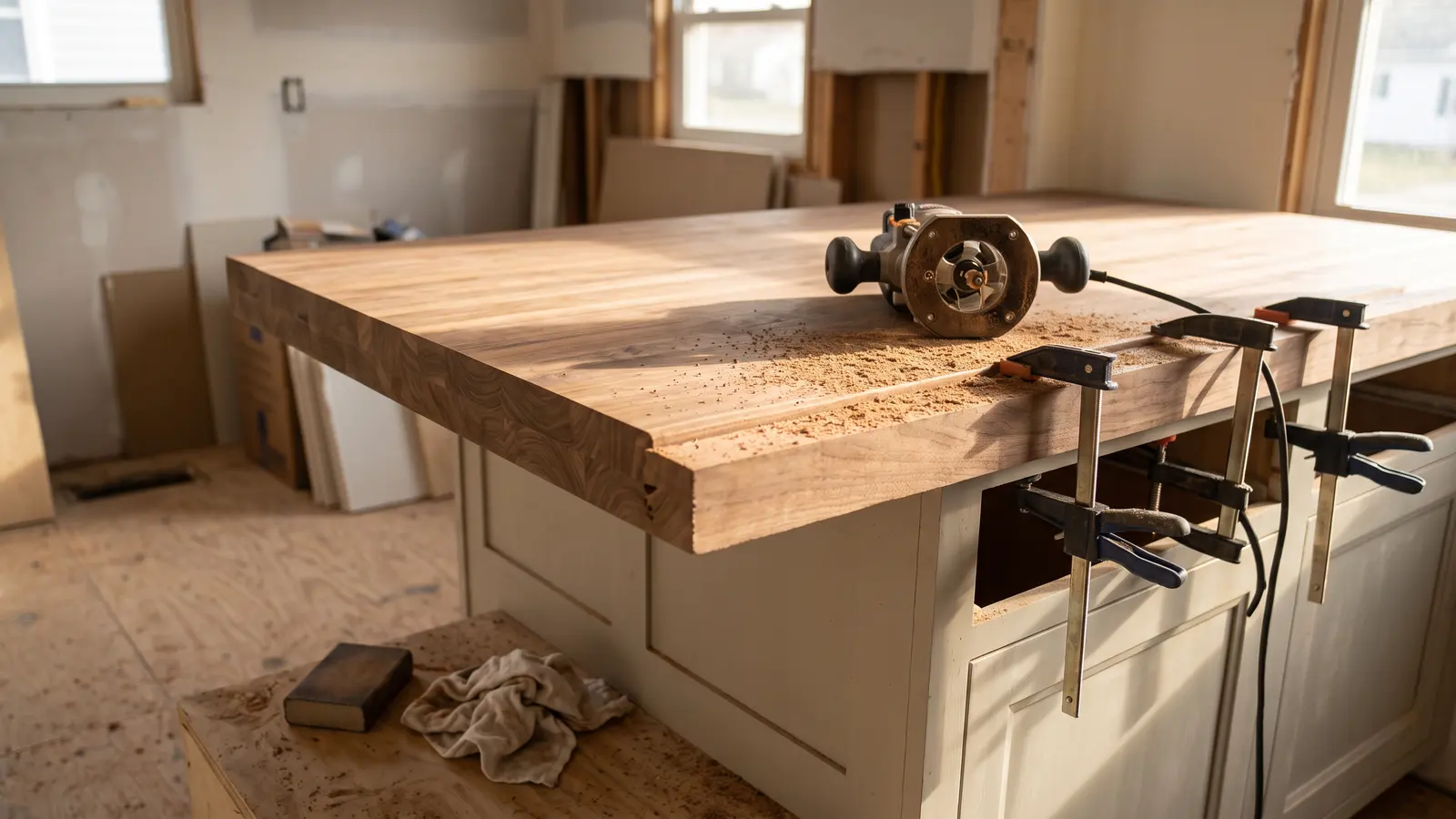
Zack and project manager Noah install a butcher block countertop on Miah's kitchen island — a direct follow-up to the stock cabinet installation from Episode 5. They check the block for square, cut it to size for a slight overhang, and set it in place.
Butcher block is one of those countertop materials that polarizes people. The case for it:
- Warm and natural — it brings organic texture to a kitchen in a way stone can't
- Repairable — scratches and stains can be sanded out. Try that with quartz
- Affordable — $40-80 per square foot installed, versus $75-200+ for quartz or granite
- Food-safe — with mineral oil treatment, it's literally a cutting board you can cook on
The case against: it requires regular oiling (every 1-3 months), it can harbor bacteria in deep cuts if not maintained, and it will show wear over time. But for an island — where it's not exposed to constant water like a sink area — butcher block is a smart, characterful choice. Given Miah's preference for incorporating personal history (that antique kitchen table from Episode 9), a living countertop surface that develops patina over time fits her style perfectly.
Planting the Boulder Wall
Jenn returns to North Asheville with landscape architect Jennifer Verprauskus from Barefoot Designs to plant succulents along the boulder retaining wall they built in Episode 7. It's the payoff to that earlier work — bare stone becomes a living wall.
The planting detail worth noting: they're using a different soil mix for the boulder wall pockets because native clay soil doesn't drain fast enough for succulents. This is exactly the kind of detail that separates professional landscaping from "I bought some plants at the garden center and stuck them in the ground." Succulents rot in wet feet. The spaces between boulders drain freely (which is why the wall works structurally), so the plants need a gritty, fast-draining soil mix to match.
Under-Cabinet Lighting: The Details That Matter
Inside, Kevin meets with electrician Mario Salamone from Concept Lighting and Electric (back from his meter box work in Episode 6) to install under-cabinet LED lighting with remote transformers. Mario's approach — running LED tape lights with transformers located in the basement for accessibility — is a pro move that most homeowners and even some electricians skip.
Why does transformer location matter? LED tape lights run on low voltage (typically 12V or 24V), and the transformer converts household 120V to the required voltage. Put the transformer behind the cabinets and you'll need to tear things apart when it eventually fails. Put it in the basement, and a future replacement is a 10-minute job. It's the kind of thinking-ahead that separates a "done" kitchen from a "done right" kitchen.
DIY Confidence Scale: Episode 10
- Butcher block counter installation: Intermediate. Measure, cut with a circular saw (use a guide!), sand the cut edge, and secure from below. The cutting is the nerve-wracking part — butcher block is expensive and you get one shot.
- Succulent planting in a boulder wall: Beginner-Friendly. The hardest part is the soil mix — use a 50/50 blend of potting soil and perlite or coarse sand.
- LED under-cabinet lighting: Intermediate. The wiring is low-voltage and safe, but routing the wire runs cleanly and soldering connections takes patience. Peel-and-stick LED tape is the easy part; everything else is the real job.
Additional Resources
- This Old House — S47 E10 Official Page
- Watch Episode 10 on PBS
- Engineered Floors (Dalton, GA)
- Barefoot Designs (landscape architecture)
- Concept Lighting and Electric
- B.B. Barns Garden Center
Next time: the big finale. All five families come home, the crew tours the finished houses, and everyone gathers at a local brewery to celebrate. Bring tissues. Again. Piper Watch: we have every reason to believe Episode 11 will deliver.
The weekly recap
Get each new recap the day it's posted.
Get each new This Old House and Ask This Old House recap by email, the day it's posted. No spam, unsubscribe anytime.
From the captions
Spotted on the job
Tools, materials, and techniques the episode actually showed or discussed. Names stay generic unless the episode said a brand. A name links to an Amazon search only when it is something a person could buy.
As an Amazon Associate, This Old Recap earns from qualifying purchases.
Product
Pro-only
L.E.D. tape
Amazon search for L.E.D. tape (opens in a new tab)
Mario installs thin low-voltage L.E.D. tape in a channel under the floating shelves to light the counter below.
Material
Pro-only
24-volt low-volt cable
Amazon search for 24-volt low-volt cable (opens in a new tab)
Mario uses 24-volt low-volt cable to power the L.E.D. tape, saying it is smaller and more flexible than the old line-voltage wire.
Product
Pro-only
L.E.D. driver
Amazon search for L.E.D. driver (opens in a new tab)
Mario uses an L.E.D. driver to transition from line voltage to low voltage for the under-cabinet lights.
Material
DIY-friendly
butcher block
Amazon search for butcher block (opens in a new tab)
Noah and Zack cut and install a cherry butcher block as the countertop for Miah's kitchen island.
Tool
DIY-friendly
router
Amazon search for router (opens in a new tab)
Zack uses a router with an eighth-inch roundover bit to ease the edges of the butcher block.
Tool
DIY-friendly
eighth-inch roundover bit
Amazon search for eighth-inch roundover bit (opens in a new tab)
Zack fits the eighth-inch roundover bit in the router so its bearing rides the cut and softens the butcher block edge.
Technique
DIY-friendly
3-4-5 triangle
Zack and Noah pull a 3-4-5 triangle on the butcher block to check whether it is square before cutting.
Material
DIY-friendly
soilless soil medium
Amazon search for soilless soil medium (opens in a new tab)
Jen mixes a soilless soil medium of perlite, peat moss, and coconut fiber substrate with native soil for the boulder wall to allow proper drainage and aeration.
Keep reading
Related recaps
Also from the Carolina Comeback
This Old House · S47 E8
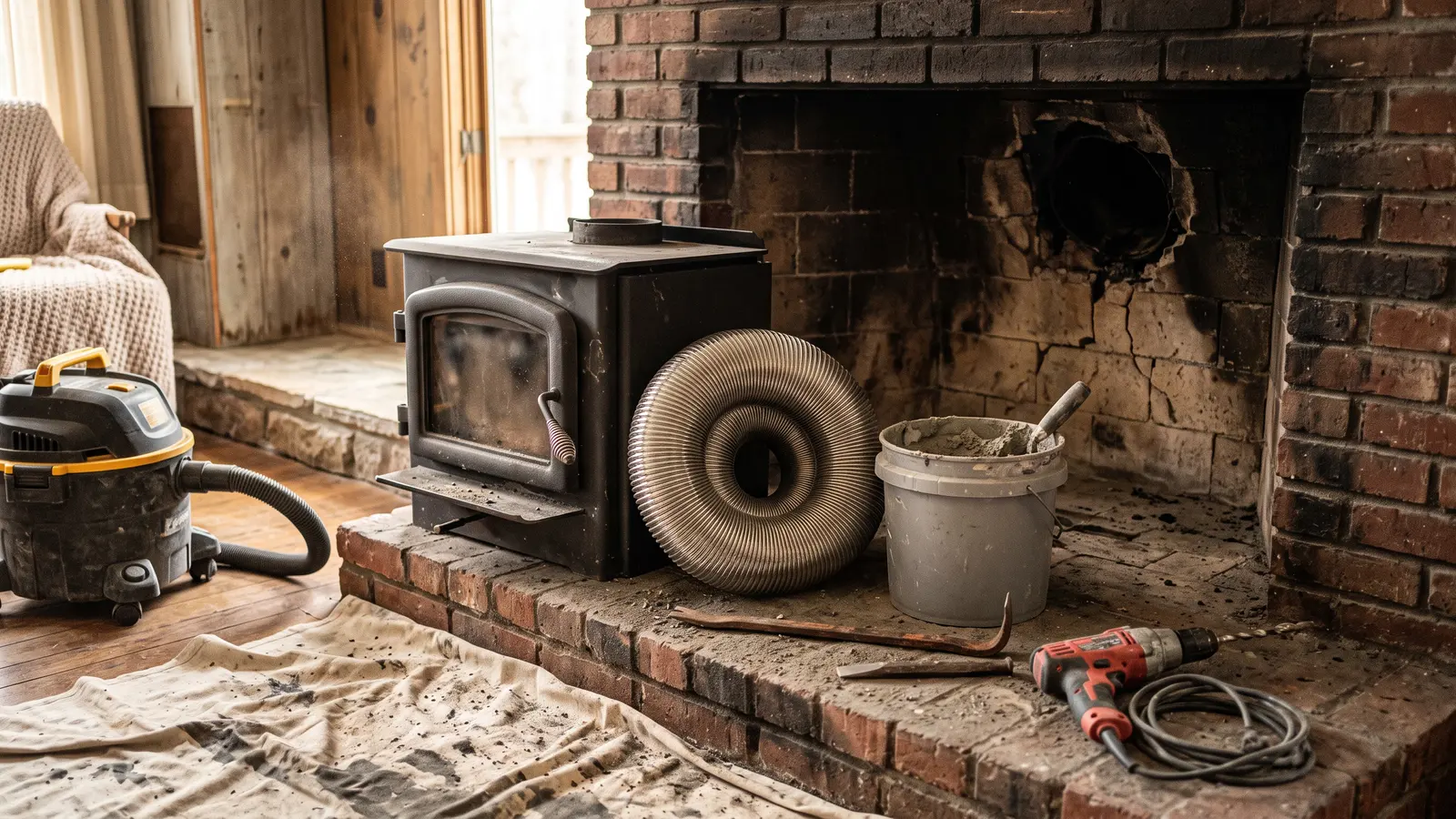
This Old House S47 E8: Asheville's Food Scene Fights Back, the Chimney Gets Its Verdict, and Paint Prep Done Right
Also from the Carolina Comeback
This Old House · S47 E7
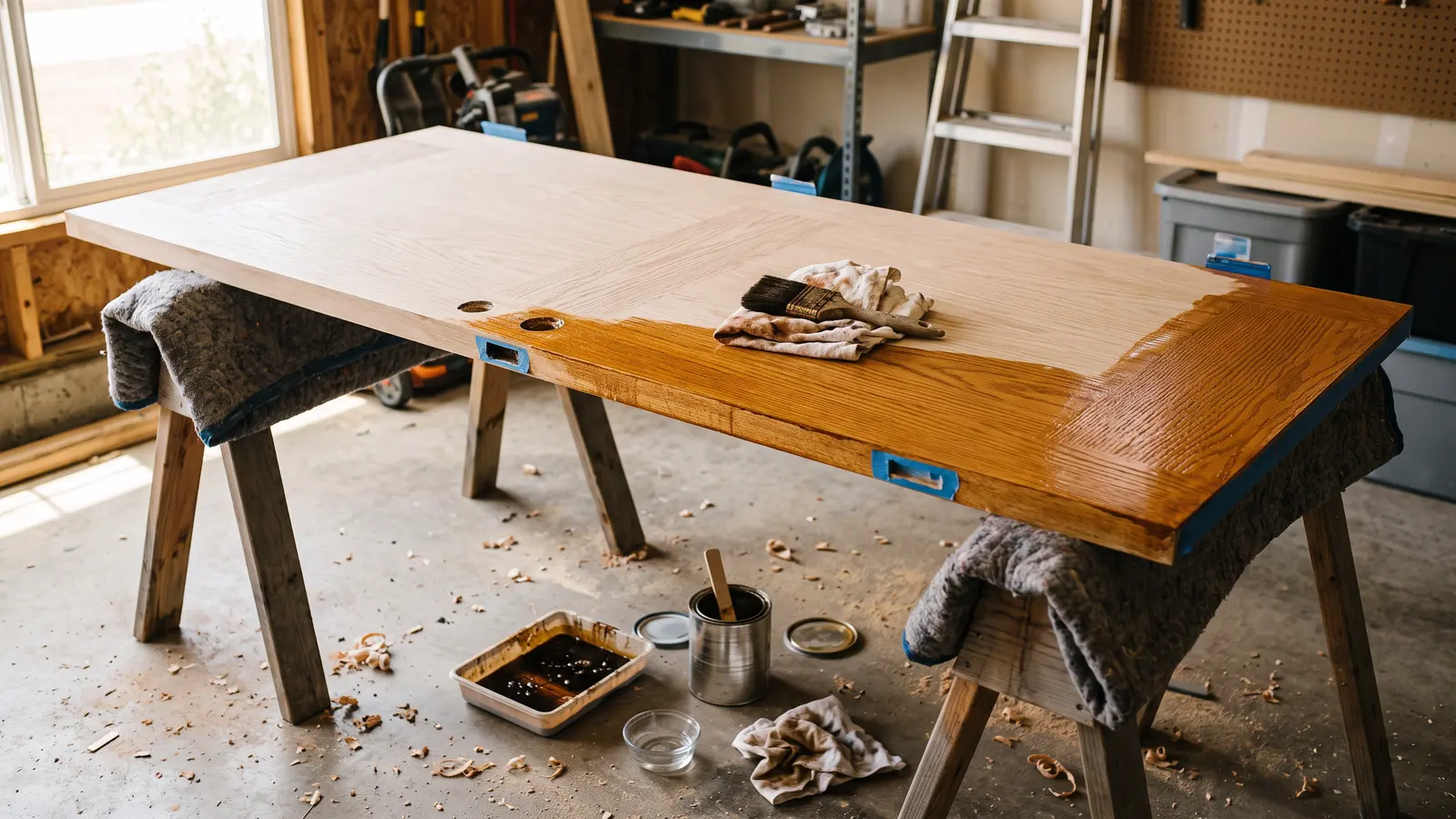
This Old House S47 E7: Boulder Retaining Walls, Door Staining 101, and Biltmore Village's Comeback
Also about Finishing
This Old House · S47 E19
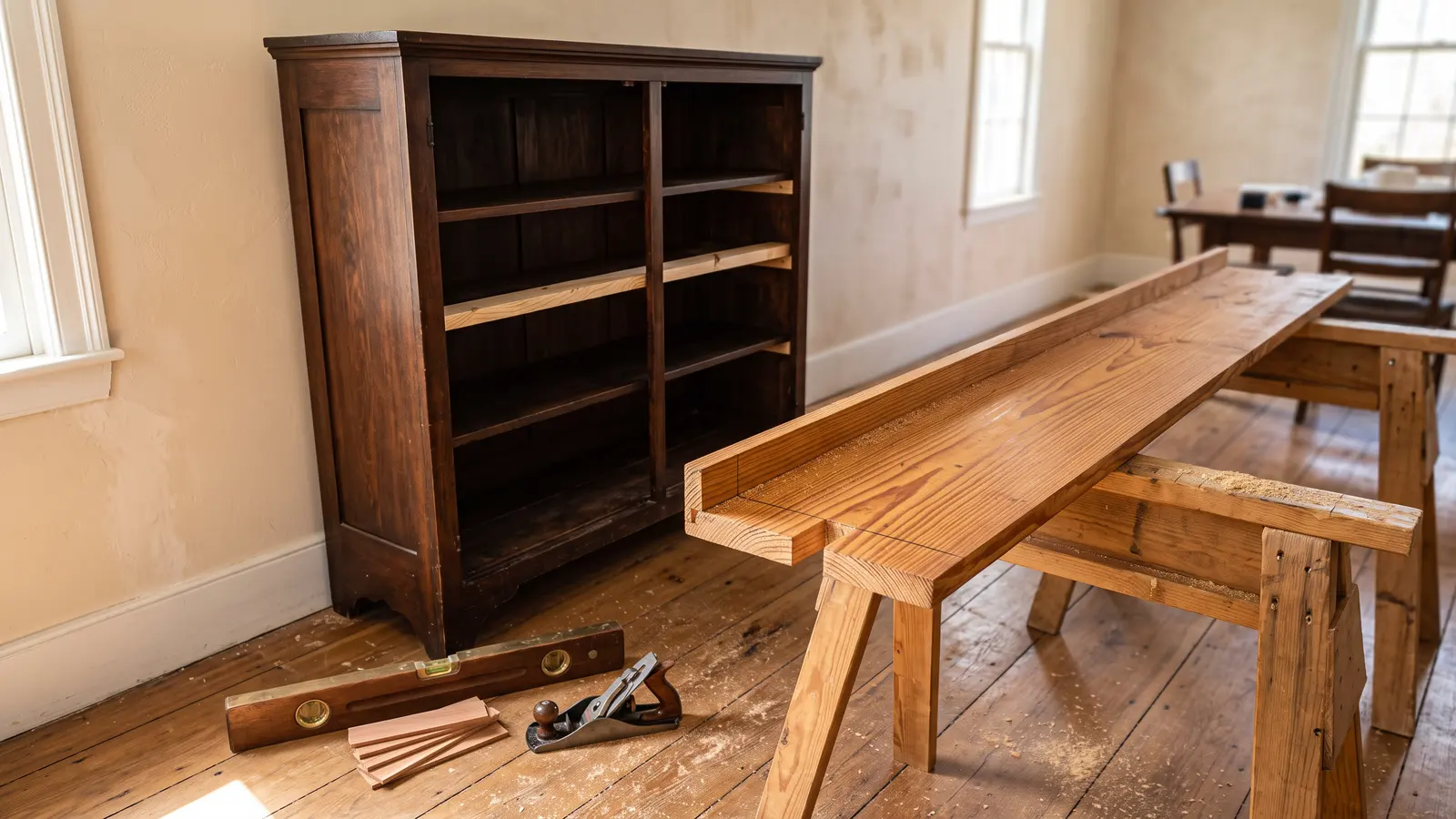
This Old House S47 E19: Needham Victorian Finishes, a 130-Year-Old China Cabinet, and a Front Door Mortise
Also about Finishing
This Old House · S47 E16