
Cut Nails vs. Wire Nails: What Old-House Framing Can Teach Us
Why wedge-shaped cut nails grip differently from modern wire nails, where you are likely to find them, and what to consider before pulling them from historic framing.
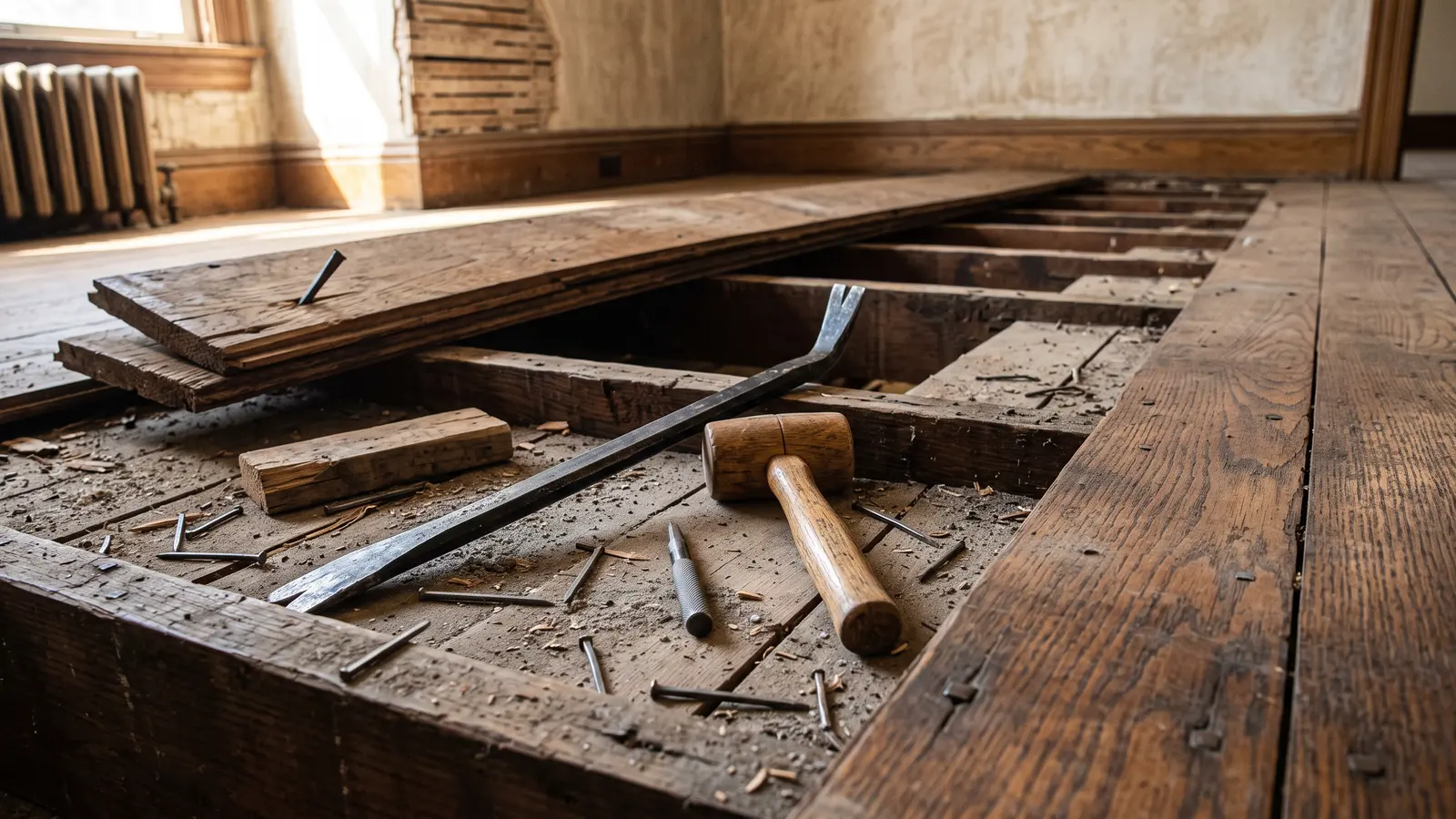
The Fastener That Refuses to Leave
Anyone who has dismantled nineteenth- or early-twentieth-century framing knows the feeling: the board is loose, the pry bar is moving, and one square-sided nail still refuses to surrender. That stubbornness is not nostalgia. It comes from the way a cut nail is made and how its tapered body interacts with wood fibers.
Modern wire nails are formed from round wire. Cut nails are sheared from plate, leaving a rectangular cross section and a wedge-shaped profile. Driven with the grain oriented correctly, that wedge can create impressive withdrawal resistance in dense, old-growth lumber.
Why the Shape Matters
A round wire nail pushes fibers aside in every direction. A cut nail's wider faces bear against more wood while its narrow edges cut through fibers. In suitable wood, that geometry makes the fastener difficult to pull straight out. It also explains why careless orientation can split a board: the wedge should generally run parallel with the grain rather than forcing the board apart.
That does not make every cut nail stronger than every modern fastener. Structural screws, ring-shank nails, engineered connectors, and code-specified nailing schedules solve loads that historic builders never calculated. The lesson is narrower: fastener shape, wood species, grain direction, and connection design all matter.
Where You Will Find Cut Nails
- Historic flooring, especially face-nailed boards
- Sheathing, clapboards, and roof boards
- Trim and finish carpentry where the head was meant to disappear
- Timber and light-frame connections in houses built before wire nails became dominant
- Modern restoration work where appearance and compatibility matter
Before You Pull One
Document the connection before demolition, work slowly to preserve reusable boards, and do not assume an old fastener is the only thing carrying a load. If the work affects bracing, a foundation connection, a roof, or a load-bearing wall, involve a qualified contractor or structural engineer. Historic fabric deserves care; structural safety deserves evidence.
Is This a DIY Topic?
DIY confidence: Learn first. Salvaging flooring or trim is approachable with patience and the right pry tools. Deciding whether an old nailed connection still meets the demands on a building is professional territory.
Where to See It in the Show
Tom's explanation in Season 47, Episode 1 connects cut nails, diagonal bracing, thick siding, and heavy masonry to the survival of Asheville-area worker houses. The exposed structure in the Needham chimney removal is another useful look at how old houses reveal their construction one layer at a time.
The weekly recap
Get each new recap in your inbox the week it airs.
One email the week the new episodes are up, with links back to the full write-ups. Confirm once. Unsubscribe any time.
Keep reading
Related recaps
Also about Historic Homes
Project note
Where Are They Now? Six More This Old House Project Houses, From the 1979 Original to a $29,100 Detroit Rescue
Also about Historic Homes
Ask This Old House · S23 E1
Ask This Old House Season 23 Episode 1: Bath Accessibility, Wooden Gutters, and the House Peter Wanted to Keep Original
Also about Restoration
This Old House · S47 E1
This Old House S47 E1: Five Families, One Hurricane, and the 1920s Construction That Refused to Quit
Also about Historic Homes
Project note