This Old House S47 E1: Five Families, One Hurricane, and the 1920s Construction That Refused to Quit
Season 47 kicks off in Western North Carolina, where Hurricane Helene turned neighborhoods into rivers. But the real star of the premiere? Worker housing from the 1920s that Tom Silva can't stop admiring.
Welcome to Season 47 — Bring Tissues
If you tuned into the Season 47 premiere expecting the usual "here's a charming fixer-upper with good bones," well, you got that. You also got kayak rescues, houses floating down rivers like parade floats, and a dog named Piper riding floodwaters in a backpack. This Old House has never opened a season quite like this, and honestly, after watching it twice, I'm still not fully recovered.
The crew — Kevin O'Connor, Tom Silva, Richard Trethewey, and Jenn Nawada — heads to Western North Carolina to meet five families rebuilding after Hurricane Helene tore through communities like Asheville, Swannanoa, and the surrounding valleys in September 2024. This isn't a renovation — it's a resurrection. And This Old House is calling the whole season arc "Carolina Comeback," which is equal parts aspirational and accurate.
The Five Families
The episode introduces us to the homeowners we'll follow for the next eleven episodes, and each story hits differently:
Jim and Allie — Swannanoa
Jim and Allie live in one of the 1920s worker houses in Swannanoa (more on those in a minute — Tom has opinions). When the flooding hit, water came up through the floorboards and floor vents. Jim's survival plan? Open the front door before the water pressure made it impossible, strap their dog Piper into a backpack, grab some foam blocks, and get to the roof. They ended up clinging to the gutters while cars and propane tanks floated past on what used to be their street.
Let me say that again: propane tanks floating down the street. Piper, for her part, got her own foam block to float on, which makes her the most resourceful dog on television this season. We'll be keeping tabs on Piper throughout these recaps — consider it the Piper Watch.
Matt and Melinda — North Asheville
Matt and Melinda live on a mountain with their two kids, so flooding wasn't even on their radar. Instead, they got six or seven trees through the roof. They'd hunkered down in the basement (smart move by Melinda, who insisted on it), and when Matt went upstairs to check on damage after the first tree hit, he found his daughter's room had "a new decorative branch" — his words, and you can hear the gallows humor doing heavy lifting. By the time the second and third trees hit, the house was open to the sky and they were trapped. Their neighbor Tony banged on the garage windows and led them out on foot.
When Kevin asks Matt what he wishes he'd done differently, the answer is simple and devastating: "I wish I had gotten us out of there." The pause that follows might be the quietest moment in This Old House history.
Paula — East Asheville
Paula's house sits near the river, but she'd never seen flooding reach her home before. This time the water rose 20 minutes from below her deck to her windows. She evacuated up a hillside with a dog under one arm, a suitcase, and — because neighbors are resourceful in the South — a crock pot full of meatloaf. From the hilltop, she watched eleven houses on her street wash away "like houseboats."
The sound is what got her most: houses crumbling against trees with a noise like crumpling a water bottle. It's a detail that stays with you.
Cat and Jeremy — Swannanoa
Cat and Jeremy are neighbors of Jim and Allie, living in the same row of worker housing. They're signing on with the same builder, and one of the reasons they decided to stay is seeing that other people are coming back too. "I think we know our neighbors better than we ever have before," Cat says. Terrible way to get there. Beautiful result.
Miah — Swannanoa
Miah's family has been on this street for generations. Her grandfather used to nap on a couch against the wall in the same house she's rebuilding. For her, the rebuild isn't just about a safe place to live — it's about honoring her grandparents. She plans to incorporate them into the new design. It's one of those moments where you realize this show is about a lot more than construction.
The Kayak Hero
We need to talk about John. While Jim and Allie were clinging to a neighbor's rooftop waiting for help, a guy named John grabbed his kayak and life jacket and started making rescue runs through the flooded neighborhood. "I heard people screaming," he says, and then he just... went. He took Piper first, then Allie (who held onto the back of his kayak while he told her to "kick for your life"), then came back for Jim.
John is the kind of neighbor everyone wants and nobody deserves. He sets the bar for neighborly heroics this season, and I suspect it'll be hard to top.
Tom Silva and the 1920s Houses That Wouldn't Budge
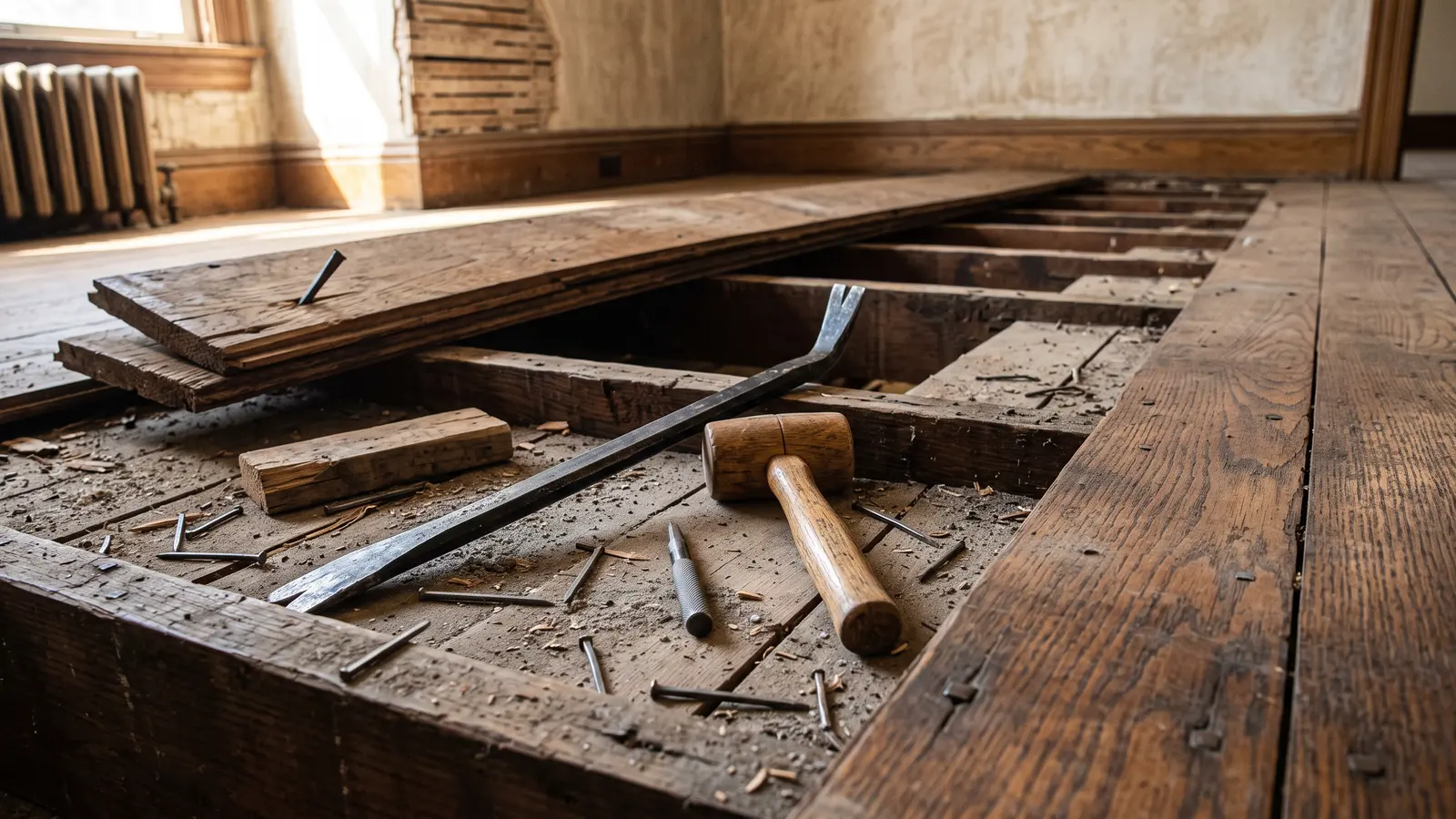
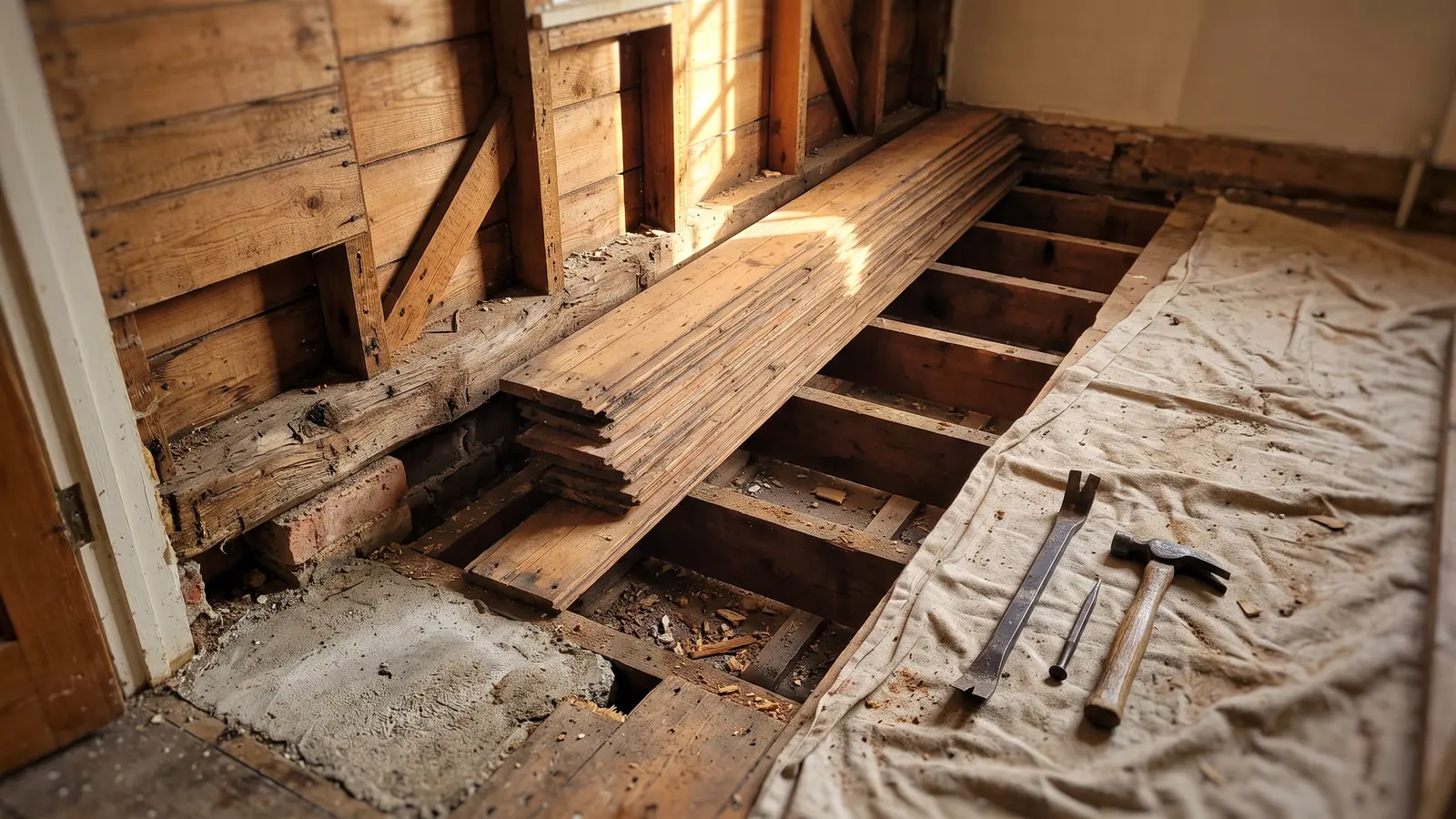
Here's where This Old House does what it does best: turns tragedy into a teachable moment. Tom walks through the Swannanoa worker housing — modest homes built in the 1920s for factory workers — and breaks down exactly why these houses survived catastrophic flooding when others didn't. And what he finds is genuinely fascinating.
The Concrete Slab Porch
Every house in this row has a poured concrete porch slab, which Tom notes was rare for the 1920s. Most porches of that era were wood-framed. But these concrete slabs are heavy — really heavy — and they're tied into the foundation. When floodwater pushed against the house, all that mass held it down. It's the architectural equivalent of wearing lead boots in a windstorm.
Cut Nails: The Unsung Heroes
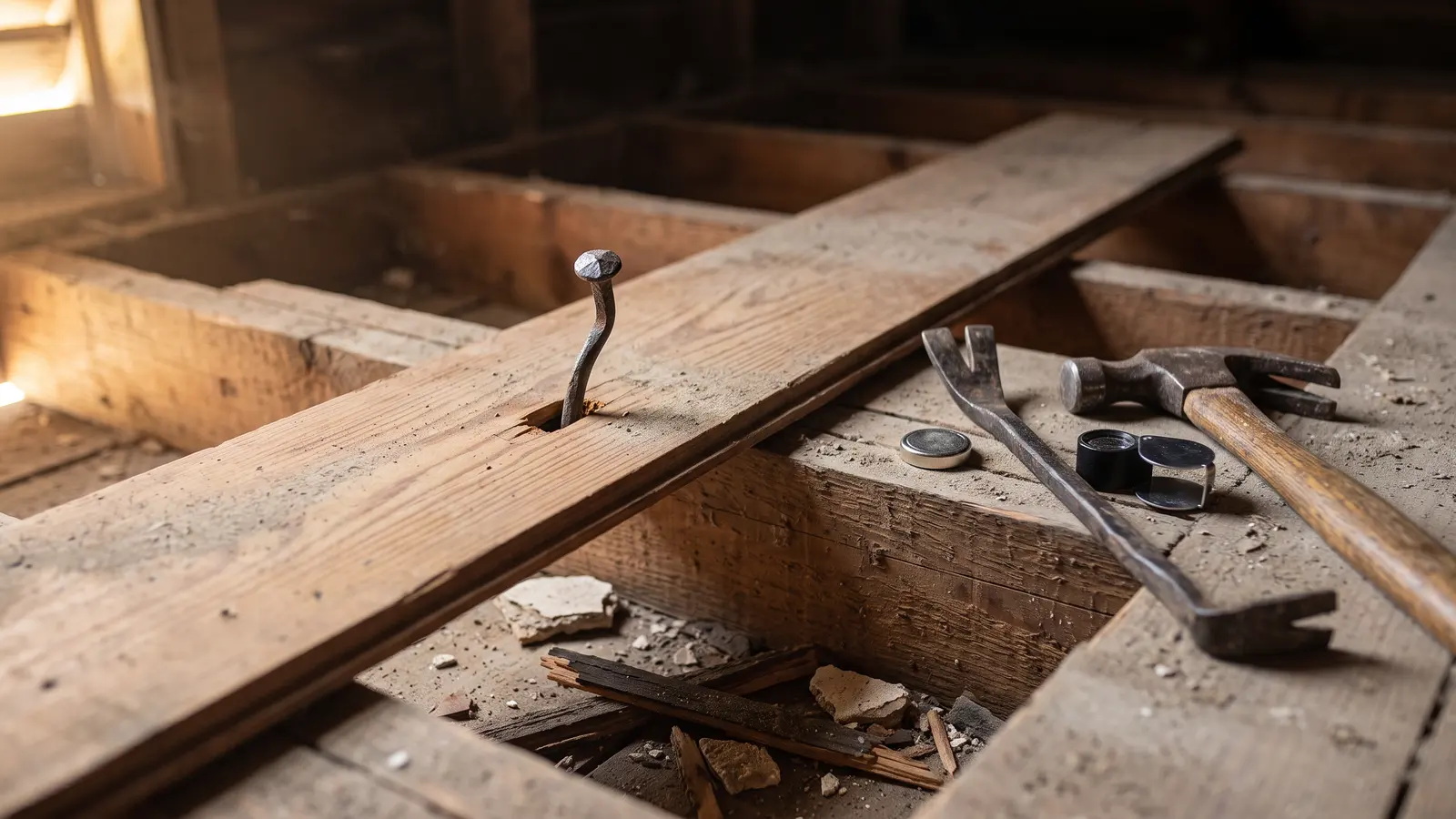
Tom finds cut nails throughout the construction — the old-fashioned square-profile nails that were standard before round wire nails took over in the late 1800s. Here's the thing: cut nails actually have superior holding power compared to wire nails. Their wedge-shaped profile tears through wood fibers rather than pushing between them, which means they resist pulling out far better than their modern replacements. The nails in these houses are spaced about six inches apart and driven through three-quarter-inch-thick novelty siding — that's a lot of fasteners in very thick material.
If you've ever done demo on a pre-1900s house, you've cursed cut nails. Turns out they deserve an apology.
Diagonal Bracing
The corners of these houses feature diagonal braces running in V-patterns from posts down to the sill plate. This is old-school lateral bracing — the predecessor to modern plywood or OSB sheathing — and it does the same job: prevent the wall from racking (shifting sideways into a parallelogram) under lateral loads. In this case, the lateral load was a river running through the neighborhood.
Braced-frame construction was standard practice from the late 1800s through the early 1900s. Today we achieve the same thing with structural sheathing panels, metal bracing, or engineered products like Simpson Strong-Tie's HDUE holdowns, which bolt framing directly to the foundation. Modern code requires specific wall bracing methods (IRC Section R602.10 if you want some light bedtime reading), but the principle is exactly the same as what these 1920s builders were doing with a hand saw and a lot of cut nails.
The Shiplap Siding Double-Duty
The novelty siding on these houses isn't just siding — it's also the sheathing. There's no separate layer of plywood or boards behind it. The thick planks, overlapping in a shiplap joint, serve as both the weather barrier and the structural skin. Every board nailed is another piece holding the wall together. Tom points out the shiplap detail: the scoop piece comes up and the half-lap goes on top, keeping rain from running into the building.
Modern building practice separates these functions (sheathing for structure, housewrap for moisture, siding for weather), and for good reason — it performs better in almost every measurable way. But there's something to be said for a system where every component pulls double duty, especially when that system is still standing after a hundred years and a hurricane.
Chimneys as Anchors: 3,000 Pounds of "You Shall Not Pass"
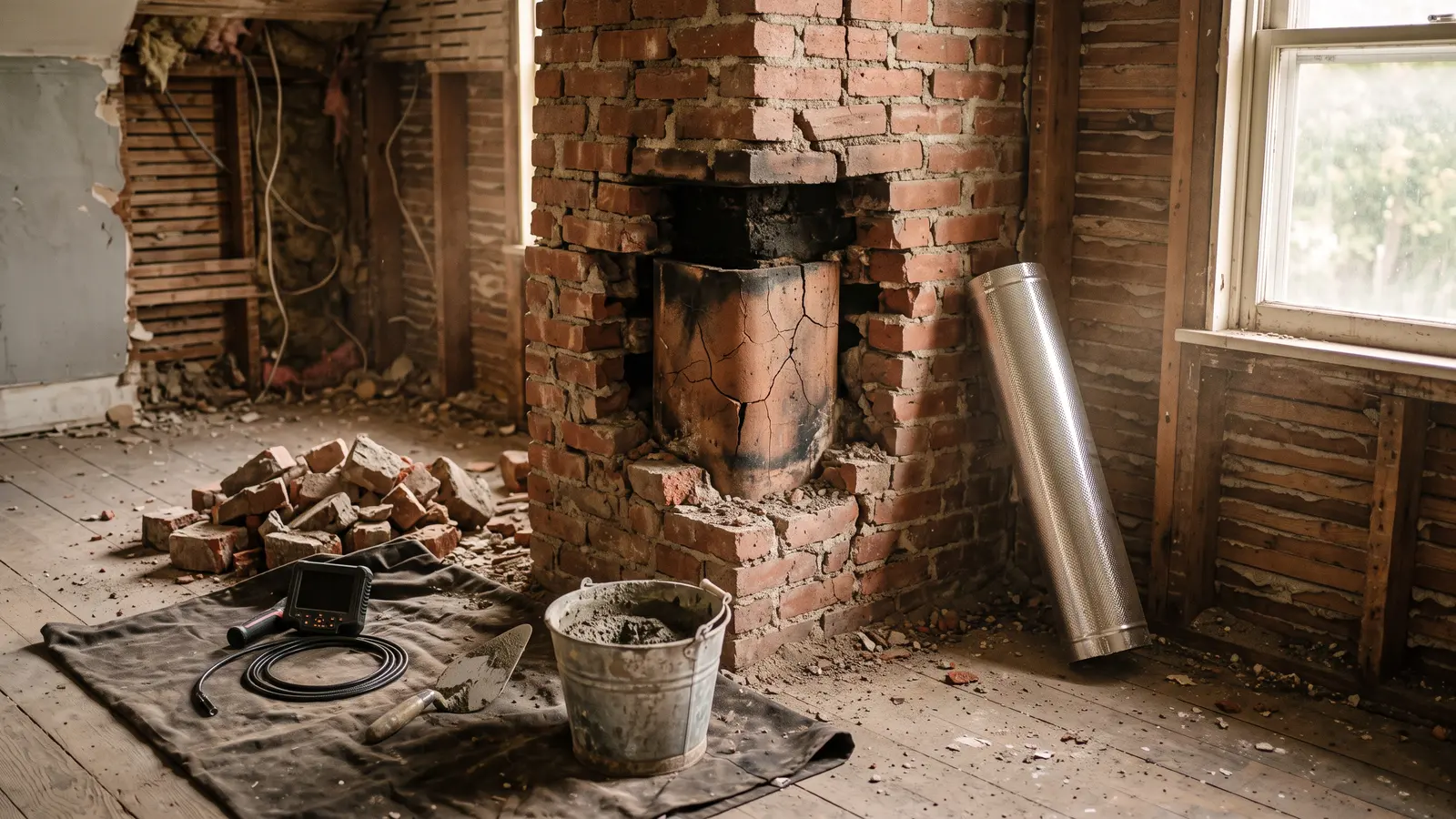
Here's the detail that made me put down my coffee: these houses each have four fireplaces and two chimneys running through the structure. Tom estimates each chimney weighs about 3,000 pounds. That's 6,000 pounds of brick, pushing straight down through the house into the ground. Combined with the concrete porch slab, the diagonal bracing, and the cut-nail-and-thick-siding walls, the water literally couldn't push the house off its foundation.
Modern homes rarely have this kind of built-in ballast. If you're in a flood-prone area, the modern equivalent is proper foundation anchoring — mechanical connections between the wood frame and the concrete foundation that resist both uplift and lateral forces. Simpson Strong-Tie's holdown systems and anchor bolts do what 6,000 pounds of chimney did a century ago, just with a lot less mortar.
Should They Rebuild? (Spoiler: Yes)
The emotional core of this episode is the decision each family faces: walk away or rebuild. The answers range from practical (Jim: "There was no way to get out of my mortgage") to emotional (Miah: "A new safe place... I'm going to incorporate my grandparents as much as possible") to defiant (Allie: "I want Swannanoa to come back bigger and better than ever").
Paula's situation is particularly interesting from a technical standpoint. Her house is one of the only ones still standing on her street, and the Army Corps of Engineers determined that the river actually moved — nine feet away from her property. She's technically no longer in a floodplain. Her home, built in 2001 by an architect experimenting with whether manufactured homes could serve as affordable housing, was bolted to its foundation in four manufactured sections with stick-built framing around it. That foundation bolting is exactly the kind of modern anchoring that saved it.
The Builders: Chris and Nick
The episode introduces builders Chris Cronin and Nick Swann, who'll be handling three of the Swannanoa houses. "It's going to be a wild ride," Chris says, which in contractor-speak usually means "the timeline is going to be ambitious." Both are locals — this is their hometown, and you can tell it's personal. Kevin asks if they need help. "We're going to need your help," Chris replies. Kevin, to his credit, looks like he means it. Whether he actually picks up a hammer remains to be seen (we'll be tracking this).
What to Watch For This Season
This premiere sets up an unusual season structure: five families, multiple job sites, and an emotional through-line that goes well beyond "should we go with quartz or granite." The next ten episodes will follow the actual rebuilds, and based on the preview, we're looking at everything from soil testing (the flood left behind a lot of silt) to bathroom tiling to landscaping to a celebration at a local brewery.
DIY Confidence Scale: Episode 1
Most of this episode is storytelling rather than hands-on work, but Tom's construction analysis gives us plenty to think about. Rating: Learn, Don't Touch. Understanding why your house is (or isn't) structurally sound is valuable knowledge, but if you're diagnosing your own foundation anchoring, please call a structural engineer. They went to school for this.
Additional Resources
- This Old House — S47 E1 Official Page
- This Old House — "The Storm" Web Exclusive
- Watch Episode 1 on PBS
- One Year After Helene: Swannanoa's Resilience (Biltmore Beacon)
- Why Cut Nails Have Superior Holding Power (Popular Mechanics)
- Simpson Strong-Tie HDUE Holdown and SABR Anchor Bolt
- Chicago Workers Cottage Initiative — Field Guide (great resource on similar era housing)
Next time on "This Old House": the rebuilds begin, a meteorologist explains exactly why Helene hit Asheville so hard, and we find out whether these century-old houses look as good from the inside as Tom thinks they do from the outside. Piper Watch continues.
The weekly recap
Get each new recap the day it's posted.
Get each new This Old House and Ask This Old House recap by email, the day it's posted. No spam, unsubscribe anytime.
From the captions
Spotted on the job
Tools, materials, and techniques the episode actually showed or discussed. Names stay generic unless the episode said a brand. A name links to an Amazon search only when it is something a person could buy.
As an Amazon Associate, This Old Recap earns from qualifying purchases.
Material
Pro-only
concrete slab
Tom points out the poured concrete slab under the porches helped keep the houses from being pushed off their foundations during the flood.
Technique
Pro-only
poured concrete foundation
Tom notes the porches have a poured concrete foundation, which was rare in the 1920s and added weight that helped the houses resist the water.
Material
DIY-friendly
novelty siding
Tom describes the six-inch novelty siding as thick, nailed on every board, and acting as sheathing.
Material
DIY-friendly
shiplap
Tom explains the shiplap half-lap piece sits over the scoop to keep rain from running into the building.
Material
DIY-friendly
cut nails
Amazon search for cut nails (opens in a new tab)
Tom notes the siding is fastened with cut nails spaced about six inches apart.
Technique
Pro-only
diagonal bracing
Tom shows diagonal braces in the corners that run to a post and sill to reduce wall movement.
Technique
Pro-only
2x4 construction
Tom says the houses are 2x4 construction with diagonal bracing in the corners.
Material
Pro-only
bricks
Tom mentions the weight of the bricks in each chimney helped hold the houses in place.
Keep reading
Related recaps
Also from the Carolina Comeback
This Old House · S47 E3
This Old House S47 E3: Cracked Chimneys, Storm-Beaten Siding, and the Army Corps Shows Up
Also from the Carolina Comeback
This Old House · S47 E4
This Old House S47 E4: Six Nails Per Shingle, Tile Underlayment, and the Biltmore's Gardens