
This Old House S47 E13: The Chimney Comes Down, Cabinets Get a Second Life, and a Stonecutter Carves a Doorway
Charlie and Mark dismantle the center chimney from roof to first floor, Tom salvages kitchen cabinets for a new pantry, and a rubble stone foundation reveals just how different 1896 construction really was.
Chimney Demolition: The Full Monty
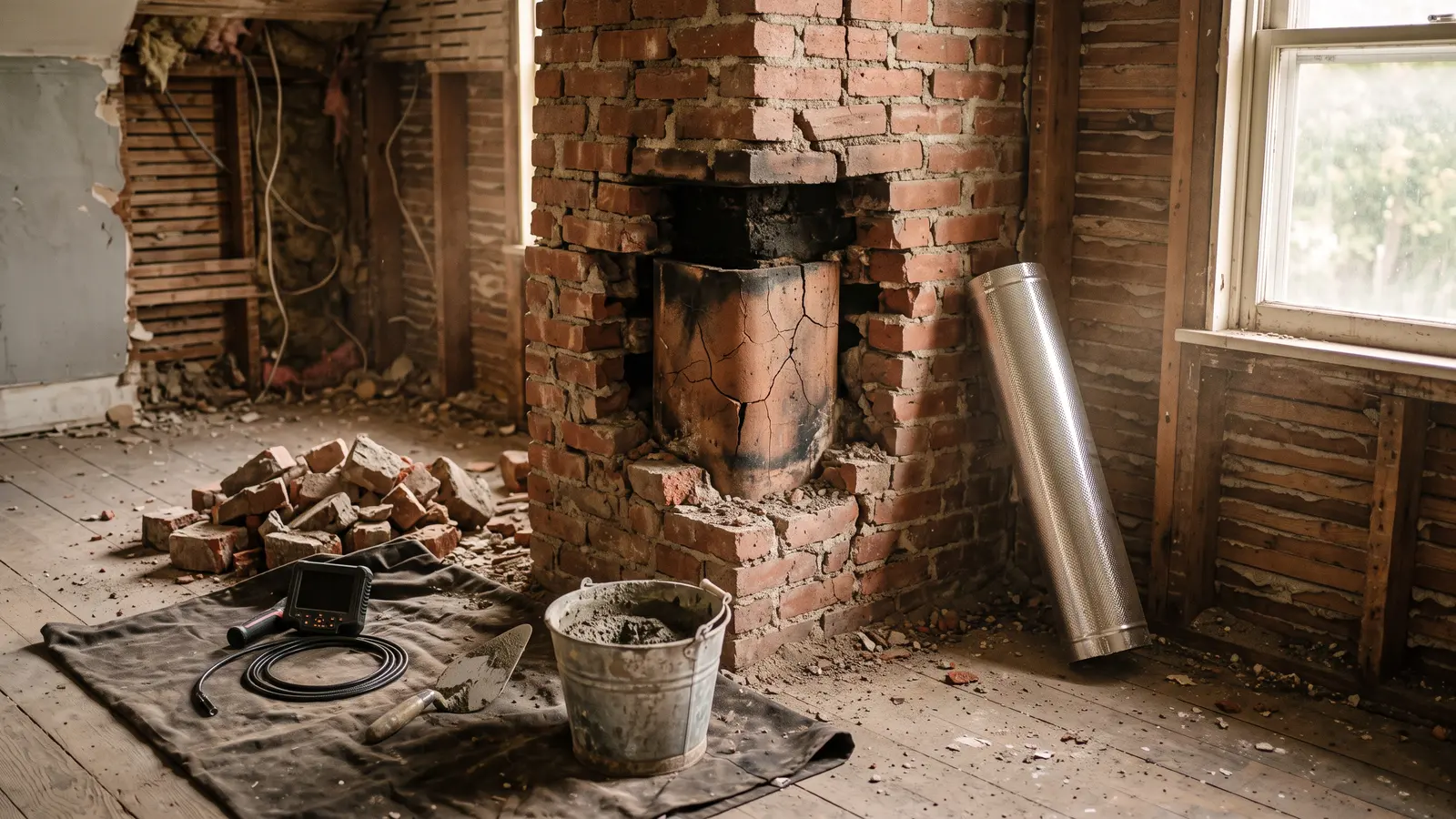
If the Asheville chimneys were characters in a drama — heroic anchors in Episode 1, cracked casualties in Episode 3, resolved with an insert in Episode 8 — then the Needham chimney is the final boss. Charlie Silva and Mark McCullough start on the roof and work their way down through three stories, dismantling the entire center chimney brick by brick.
This is methodical, heavy, dusty work. A center chimney in an 1896 house isn't just a flue — it's a structural column of brick that runs through the core of the building. Removing it requires understanding what it's supporting (answer: potentially a lot) and having a plan for temporary support while the permanent structure is modified. Charlie and Mark work through the third floor, the second floor, and down to the first-floor fireplace.
The payoff is immediate: architect Marcus Springer shows Kevin that removing the chimney frees up roughly 40 square feet across the home's three floors. That's 40 square feet per floor that was occupied by brick and mortar doing nothing but holding up more brick and mortar. In a house where the floor plan felt cramped, those square feet matter.
Cabinet Salvage: Tom's Careful Hand
Tom and Kevin work together to remove the existing kitchen cabinets — carefully, because Liz and Patrick plan to reuse them in their new pantry. This is one of those "reduce, reuse" moments that the next episode's title makes explicit: good cabinets don't need to be thrown away just because the kitchen layout is changing.
Tom's tips for cabinet salvage are universally useful:
- Remove doors and drawers first — they're the most fragile parts
- Unscrew from the wall rather than prying — keeps the cabinet boxes intact
- Label everything — which cabinet, which wall, which position
- Protect the finish during storage
Reusing kitchen cabinets in a pantry is smart design: pantry cabinets don't need to be pretty (nobody's impressing guests in the pantry), and the old cabinets already have functional hardware, shelving, and a proven track record. It saves money and keeps perfectly good materials out of the dumpster.
The Foundation and the Rubble Stone Surprise
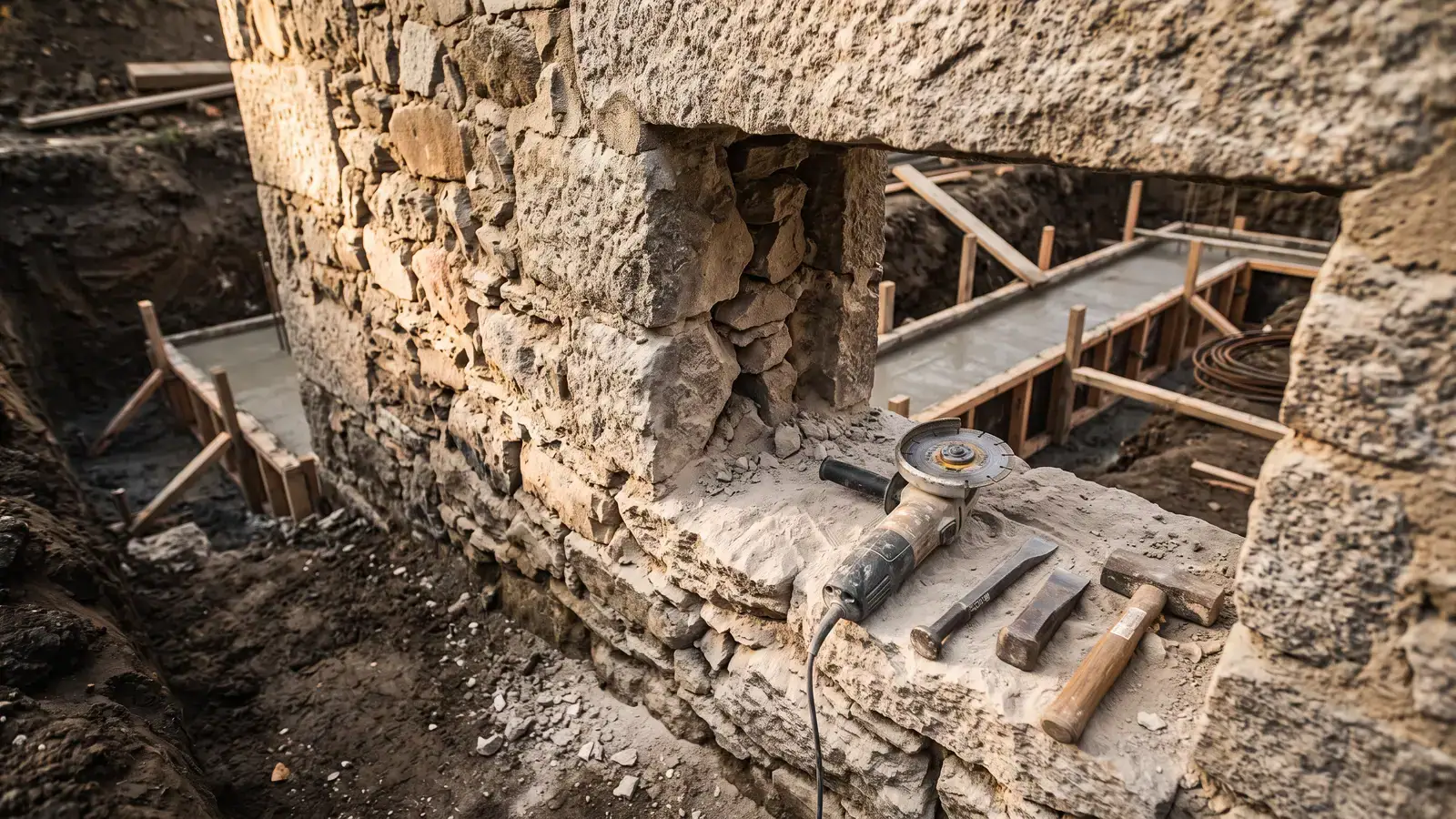
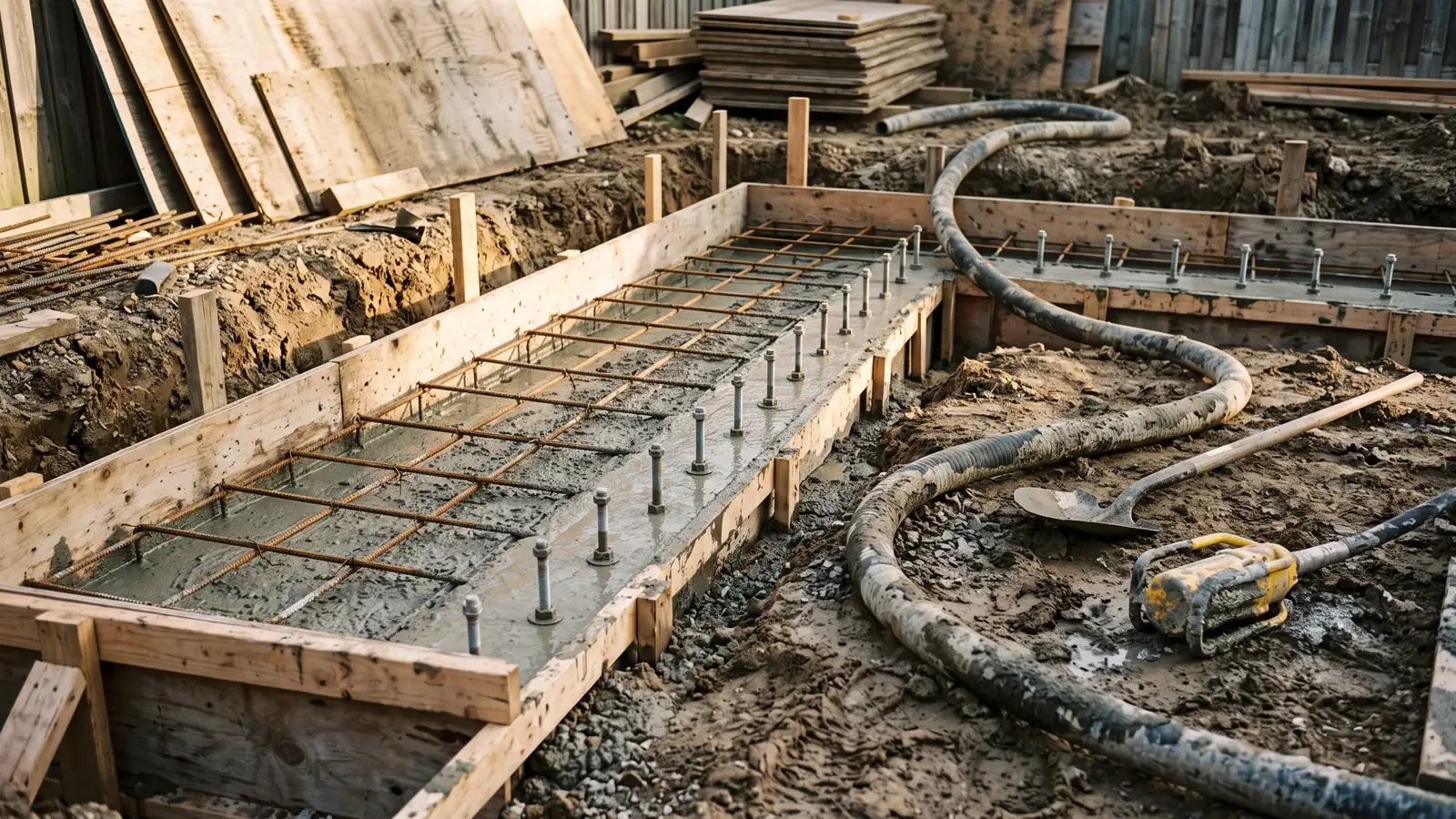
Out back, Charlie is in the excavated addition space, prepping for the foundation pour. This is where old-house renovation gets genuinely interesting: the excavation uncovered the original 1896 rubble stone foundation. Rubble stone is exactly what it sounds like — irregularly shaped stones set in mortar, the standard foundation technique before poured concrete became dominant in the early 1900s.
Charlie determines the rubble stone isn't structurally sound enough to support the new addition (not surprising for 130-year-old rubble masonry), so a new retaining wall will stabilize it before the addition's foundation is poured. Then a stonecutter carves a doorway through the original basement wall to connect the old house to the new addition — and Mark finishes the opening, filling gaps to create a seamless transition.
This moment — old rubble stone meeting new concrete, a 19th-century basement opening into a 21st-century addition — is what This Old House does better than any show on television. The intersection of what was and what will be, handled with equal respect for both.
DIY Confidence Scale: Episode 13
- Chimney demolition (multi-story): Not Even a Little DIY. Structural engineering, debris management, dust containment, potential asbestos — this is a multi-trade professional job.
- Cabinet removal for salvage: Beginner to Intermediate. Screwdriver, patience, labels. The most common mistake is rushing and damaging the face frames. Take your time.
- Foundation work: Hire a Professional. Excavation, forming, pouring, and tying into existing structures all require expertise and typically permits.
Additional Resources
Next time: asbestos rears its head (because of course it does in an 1896 house), the aluminum siding comes off and gets recycled, and an 89-pound steel beam gets craned through a window. Structural engineering meets real-world logistics.
The weekly recap
Get each new recap the day it's posted.
Get each new This Old House and Ask This Old House recap by email, the day it's posted. No spam, unsubscribe anytime.
From the captions
Spotted on the job
Tools, materials, and techniques the episode actually showed or discussed. Names stay generic unless the episode said a brand. A name links to an Amazon search only when it is something a person could buy.
As an Amazon Associate, This Old Recap earns from qualifying purchases.
Product
DIY-friendly
kitchen cabinets
Tom removes marked kitchen cabinets so they can be reused in the new pantry.
Tool
DIY-friendly
flat bars
Amazon search for flat bars (opens in a new tab)
Tom uses different-sized flat bars to pry apart cabinet parts during removal.
Tool
DIY-friendly
chisel
Amazon search for chisel (opens in a new tab)
Tom uses a chisel to get in behind the crown molding.
Tool
DIY-friendly
Technique
DIY-friendly
temporary leg
Tom makes a temporary leg from scrap wood to support a cabinet while he removes its screws.
Tool
Pro-only
railroad spike
Mark uses a railroad spike as a pry tool to get under the chimney cap and brick bed joint.
Tool
Pro-only
flat chisel
Amazon search for flat chisel (opens in a new tab)
Mark uses a flat chisel to pry up the metal chimney cap.
Tool
Pro-only
diamond blades
Amazon search for diamond blades (opens in a new tab)
A stonecutter uses four different-sized diamond blades to saw-cut an opening through new concrete and the old foundation.
Keep reading
Related recaps
Also from the Suburban Victorian
This Old House · S47 E15
This Old House S47 E15: Round Ducts Win, Spray Foam Goes In, and Tom's Window Flashing Masterclass
Also from the Suburban Victorian
This Old House · S47 E16
This Old House S47 E16: Inside a Millwork Factory, Rain Screens Explained, and Composite Decking Goes Down
Also about Chimneys
This Old House · S47 E3
This Old House S47 E3: Cracked Chimneys, Storm-Beaten Siding, and the Army Corps Shows Up
Also about New Construction
This Old House · S47 E21