This Old House S47 E2: Why the Mountains Flooded and the Slow, Muddy Work of Starting Over
A meteorologist explains how the Blue Ridge Mountains turned Hurricane Helene into a rain machine, while the crew starts ripping out walls, replacing panels, and prepping for the long road ahead.
The Science of Why This Happened
Last week we met the families. This week we learn why their lives were turned upside down — and the crew finally picks up some tools. Episode 2 opens with Kevin meeting meteorologist Stephanie Abrams, and if you've ever wondered why a hurricane caused catastrophic flooding 300 miles inland in the mountains, well, pull up a chair.
The short answer: orographic lifting. When Helene's moisture-laden air mass slammed into the Blue Ridge Mountains, the terrain forced it upward. Rising air cools, and cool air can't hold as much moisture, so it wrings out like a sponge. The ridgeline of the Blue Ridge runs roughly perpendicular to the southeast winds Helene was pushing, which means maximum lift and maximum rainfall. It's the same reason the Pacific Northwest gets so much rain — except this was a hurricane, not a drizzle.
But Stephanie explains it wasn't just the orographic effect. There was a predecessor rain event — 6 to 12 inches of rain had already fallen across the mountains 24 to 36 hours before Helene arrived. The ground was already saturated. Every drop from Helene had nowhere to go but downhill, and in the mountains, "downhill" means straight into river valleys where people live. The NC State Climate Office recorded double-digit rainfall totals over four days.
For those of us who think of hurricanes as coastal problems: this is the episode that corrects that assumption. Mountains don't protect you from hurricanes. In some cases, they make things worse.
The Work Begins: Swannanoa
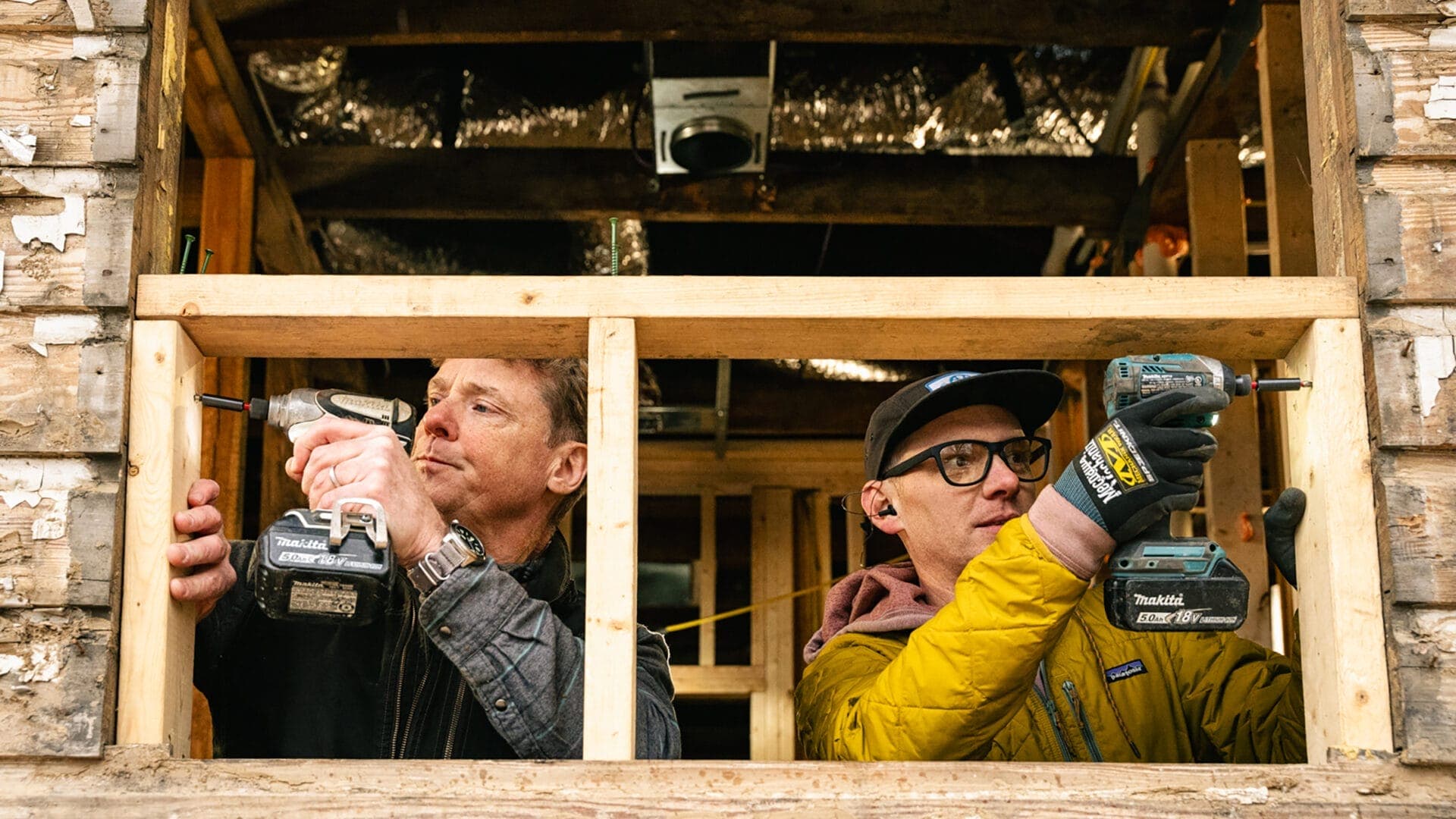
Back in Swannanoa, the rebuilding starts at Jim and Allie's house — the same 1920s bungalow that Tom couldn't stop admiring last episode. Kevin teams up with builder Chris Cronin to demo and reframe the back wall of the bathroom, prepping it for a new window and tile. If you remember Tom's love letter to the diagonal bracing and cut nails, seeing the interior walls opened up is bittersweet — it's quality construction getting torn out because a river decided to visit.
Reframing a Bathroom Wall
What's shown here is straightforward but important: when a flood-damaged wall comes out, you're not just replacing drywall. You're checking the framing for rot, moisture damage, and structural integrity. Chris and Kevin pull the wall back to studs and reframe to accommodate a new window — which means cutting a header, adding jack studs and cripple studs, and making sure everything is plumb and level before any finish work begins.
This is the kind of work that looks deceptively simple on TV but separates a lasting repair from a cosmetic band-aid. If your framing is wet, warped, or compromised, everything you put on top of it — tile, drywall, trim — will eventually tell the story. The lesson here is boring but true: don't rush the rough work.
Miah's Attic HVAC Prep
Meanwhile, over at Miah's house (Piper Watch update: no Piper sighting this episode, but we remain vigilant), Nick Swann and Zack Dettmore are working in the attic to prepare the HVAC system for insulation ahead of a future house-raising. Placing HVAC in the attic is a common choice in the South where crawl spaces are prone to moisture issues, but it comes with trade-offs.
The upside: you keep your ductwork out of a damp, flood-prone crawl space. Given what just happened to these homes, that's a compelling argument. The downside: attics get hot in summer — we're talking 130°F+ in a North Carolina July. If your ducts aren't properly insulated and sealed, you're asking your AC to cool air that's running through an oven. Nick and Zack are prepping the space for insulation, which is the right move. An uninsulated attic HVAC system is like wearing a winter coat in a sauna and wondering why you're sweating.
Modern best practice, per the Department of Energy and building science experts, is to bring the attic inside the building envelope — spray foam under the roof deck or rigid foam above it — so the HVAC equipment operates in conditioned space. Whether that's in the budget here remains to be seen.
East Asheville: The Invisible Trades
Richard Trethewey heads to Paula's house in East Asheville, and what he finds is the work that nobody sees and everybody needs: the rough-in trades. Electrician Chester Ervin is replacing the electrical panel, and plumber Larry Smith is handling bathroom plumbing rough-ins.
Electrical Panel Replacement
When floodwater submerges an electrical panel, it's not a "dry it out and hope for the best" situation. Water and electricity aren't friends, and corrosion from flood-contaminated water (which carries silt, chemicals, sewage, and who knows what else) makes every breaker, bus bar, and connection suspect. The standard practice — and FEMA's recommendation — is full replacement of any electrical equipment that was submerged.
Chester's putting in a modern panel, which means the house gets a significant safety upgrade out of an awful situation. Modern breakers include arc-fault circuit interrupters (AFCIs) and ground-fault circuit interrupters (GFCIs) that the original panel almost certainly didn't have. Silver lining, if you're looking for one.
Bathroom Plumbing Rough-In
Plumber Larry Smith is laying out the supply and drain lines for the bathroom while the walls are still open. This is the stage where every decision matters and none of it is visible once the drywall goes up. Drain slope (1/4 inch per foot, minimum), vent placement, supply line routing — get it right now or tear the walls open later. Plumbing rough-ins are one of those things I genuinely enjoy watching professionals do, mostly because I know from bitter personal experience how wrong it can go when you wing it.
North Asheville: Demo Day
Over at Matt and Melinda's place (the mountain house that got hit by six or seven trees), Zack teams up with builder Hunter Ward and lead carpenter James Moore to demo the floors. If you recall from Episode 1, this house was open to the sky in multiple rooms. Before you can rebuild up, you have to clear out. Demo is the least glamorous work on any job site — heavy, dusty, and you're basically paying to make a mess — but it's also oddly satisfying. There's a reason demo day is everyone's favorite day on a renovation.
Kevin, it should be noted, was on the interview/tour circuit for most of this episode. The Kevin Helper Arc scorecard: 1 wall reframe (with Chris doing the heavy lifting). We're tracking this.
The Rescue Reunion
The episode closes with what might be the most emotional moment of the season so far. Kevin sits down with neighbors Stephanie and John to hear their rescue story — and then facilitates a reunion between John (the kayak hero from our Episode 1 coverage) and the family he saved from their rooftop. John and his neighbor Rob had been making rescue runs through the flooded streets, pulling people off roofs and out of attics.
This is the kind of segment that reminds you This Old House has always been about more than construction. It's about community. And right now, Swannanoa's community is doing something remarkable.
DIY Confidence Scale: Episode 2
We've got a range this week:
- Reframing a wall for a window opening: Intermediate. If you understand headers, jack studs, and load paths, this is doable. If "jack stud" sounds like a character from a Western, call a contractor.
- Electrical panel replacement: Hire a Professional. No exceptions. This is permitted work in every jurisdiction for good reason.
- Plumbing rough-in: Hire a Professional unless you really know what you're doing. Bad plumbing announces itself months later, usually through your ceiling.
- Floor demo: Beginner-friendly. Grab a pry bar, put on safety glasses, and go to town. This is therapy with a tool belt.
Additional Resources
- This Old House — S47 E2 Official Page
- Why Did It Flood So Badly? The Orographic Effect (Citizen-Times)
- NC State Climate Office: Historic Flooding Follows Helene
- NOAA: Hurricane Helene's Extreme Rainfall
- Balsam Built (Swannanoa contractors)
- Ward Enterprises (North Asheville builder)
Next time: Mark investigates chimney damage with a local mason (remember how Tom said those 3,000-pound chimneys held the houses down? Let's see what they look like after a hurricane), siding goes up, and the Army Corps of Engineers explains what they've been doing on the ground. Piper Watch continues — stay vigilant.
Keep reading
Related episodes & guides