Ask This Old House Season 24 Episode 10: An Idaho Backyard Makeover for Community Dinners, Plus Two Window Wells That Finally Fit
Jenn Nawada heads to Coeur d'Alene, Idaho, to help Adam—whose weekly Monday Night Dinners now draw hundreds—redesign his backyard with an outdoor kitchen, a stone pathway, and fresh sod. Then Mark McCullough swaps out two rusted, off-kilter window wells, showing the proper demo, drainage, and galvanized steel install.
The Backyard That Quickly Outgrew Its Layout
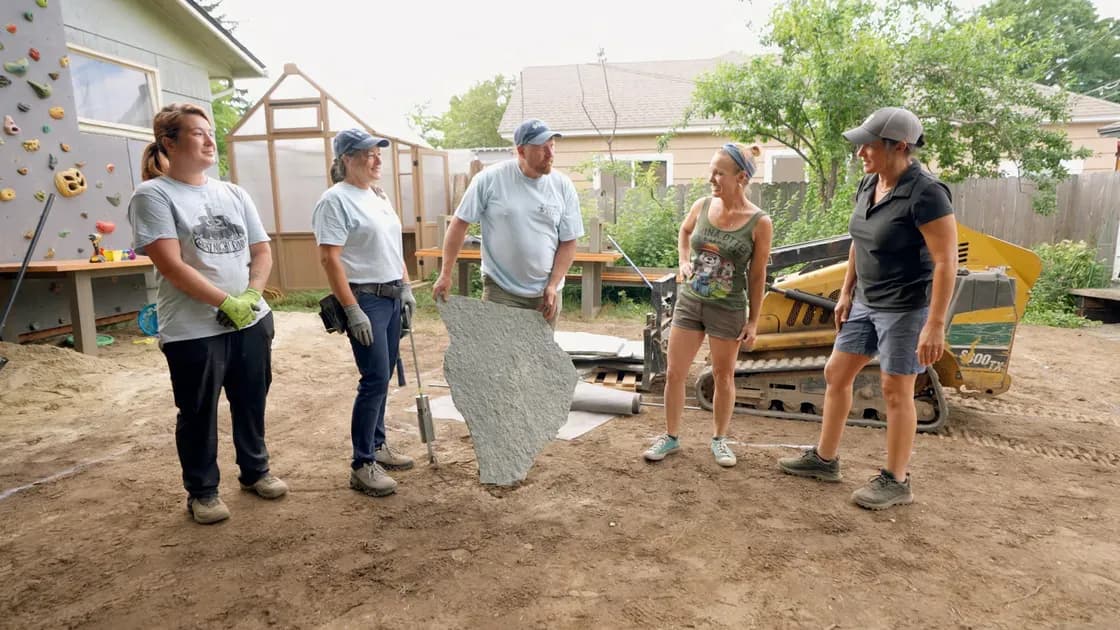
Adam moved to Coeur d'Alene eight years ago without knowing a soul. He started Monday Night Dinners the way his mother did: cooking for family, then expanding the invitation to anyone who'd show up. Eleven people came to the first meal. By the time Jenn Nawada arrived for this episode, Adam had hosted 94 dinners, sometimes drawing 200 neighbors. The backyard, with its tiny donated deck, single grill, sand pit, climbing wall, and makeshift stage, was a bottleneck on a scale that only a crowd could reveal.
Walking the yard with Jenn, Adam explained that the main path from the house to the cooking area funneled everyone into a pinch point. The grill faced the road, not the guests. 'You want to be facing and watching all your friends have a great time,' Jenn told him. Her fix, worked out with local designer Adrienne, called for three things: an outdoor kitchen that could feed a crowd, a stone pathway that directed traffic without a word, and a layer of fresh sod to tie it all together. What makes this segment unusual is that the homeowner didn't write in about a leaky faucet; he wrote in about an idea that had outgrown its dirt footprint. Jenn turned the job into a community build, pulling in volunteers from Adam's own dinner network.
An Outdoor Kitchen Built on Steel and a Welding Lesson
Savage, one of the volunteers, framed the kitchen from welded steel rather than cinder block—a lighter, cleaner approach that didn't load the donated deck with unnecessary weight. The layout added a sink, a grill, and a griddle, finally giving Kyle the grill master counter space and a view that faced his friends instead of the street. Before the cedar siding went on, Savage offered Jenn a quick MIG lesson: pull the trigger, hold the wire an eighth of an inch off, run a small zigzag or circle, and trust the auto-darkening helmet. 'This is soldering for adults,' he said. Jenn laid a passable bead on a corner; it disappeared from the edit quickly enough that I suspect the structural welds were left to Savage. The kitchen's OSB base got a rough-cut cedar skin, chosen deliberately with the rough side out. 'I like the texture, too,' Jenn told Adrienne as they nailed the boards with an electronic level guiding every course.
The resulting kitchen looks simple—open shelving, a natural material palette—but underneath you've got plumbing, electrical, and gas connections that had already been roughed in off camera. Television editing loves to show the cladding going up fast, but the prep work that made that possible was the real skeleton. The cedar will weather to gray, Adrienne noted, matching the yard's evolving look.
A Stone Pathway That Says 'Walk Here' Without Words
While the kitchen took shape, landscape designer Marina organized the flow. Idaho quartzite steppers—native, durable, supposedly lasting 20 generations—were set in sand on a gentle curve that swept past the fire pit and into the main gathering area. The crew dug sod strips, leveled the ground, and tamped it before laying fresh turf. The goal was to make the path so obvious that even a first-time guest wouldn't have to ask where to go, reducing the congestion that made the old yard feel cramped.
The quartzite itself is a handsome, slightly shimmering stone that picks up light. It's heavy, and the volunteers moved it by hand. Nobody here was a stonemason; they were neighbors who'd eaten at these dinners and wanted to pay it back. Jenn bounced between teams, checking the kitchen layout, verifying level on the walkway, and hopping on a shovel when the sod pile needed spreading. The pace was breakneck, but the design was simple enough that clear instructions and a handful of willing backs could execute it in a day.
The 95th Monday Night Dinner
One hour after the crew wrapped, the yard filled. Adam stood on the new stone path and welcomed first-timers while the bands took the stage. He thanked the army of volunteers, and Jenn stayed to eat. The payoff wasn't a contrived reveal; it was a working kitchen feeding real people, a path that actually moved a crowd, and a lawn that no longer looked like a trampled afterthought. If you've ever tried to host twenty people in a yard designed for four, the before-and-after logic here hits home.
Two Window Wells That Had Seen Better Days
Across the country, Mark McCullough met Allie, whose basement windows were protected by two rusted, tilted window wells. One was planted in asphalt, the other in mulch. Both were off-balance—one edge closer to the window than the other—and the rust suggested they'd been letting water and debris through for years. Mark explained the triple role of a window well: it lets in light, it keeps pests out, and most importantly, it manages water. The steel itself doesn't drain; the gravel bed underneath does.
He measured 28 inches from the concrete step to the first jamb, then duplicated that distance on the other side for symmetry—a meticulous habit that fans will recognize from his chimney crown replacement two seasons ago (Medicine Cabinets, Chimney Crowns, and Time Capsules). Over there, Mark had Kenny light a paper bag to check draft; here, the diagnostic tool was a tape measure and a level. The problems were less dramatic but just as structural.
From Asphalt Cutter to Expanding Wedge Bolts
On the asphalt side, Mark fired up a gas saw with a blade made specifically for asphalt, while Allie followed with a HEPA vacuum to capture the dust—a safety step the edit breezes past but that matters when you're cutting through material that may contain contaminants. After slicing a straight section, they pried out the old well, dug down ten inches, removed the soil, and replaced it with crushed stone. The tamping Allie did with the hand tamper was real work, and Mark made sure she compacted in even layers. Drainage before decoration, just as Jenn taught in her drainage-correction segment last season (When Drainage Meets Determination). On the mulch side, they skipped the saw entirely: a rake and a shovel took the well down to the dirt in minutes.
With the gravel beds compacted, Mark set the new galvanized steel wells—18 inches deep, chosen to leave enough window glass exposed for light—and anchored them into the concrete foundation with expanding wedge bolts. He drilled six holes per well using a hammer drill and masonry bit, then tightened the nuts until the sleeves expanded and locked into the concrete. Allie handled the tamping, the drilling, and the ratchet work, and you could hear the satisfaction in her voice when the nuts drew tight. Mark pointed her toward standard well covers available at any hardware store, and they dressed the asphalt cut with decorative crushed blue stone as a temporary walkway until the larger driveway renovation happens.
The whole job, split across two wells, involved less than a day of real labor, but Mark didn't hurry. He let Allie learn the steps, which is the kind of teaching that leaves a homeowner capable of spotting rust and tilt before it gets out of hand.
DIY Confidence Scale
- Outdoor Kitchen (Steel Frame, Welding, Utilities): Professional. Welding, gas, plumbing, and electrical connections are trades territory. Even the cedar cladding required a nail gun and an exacting level setup. If you're not already welding, this isn't the starter project.
- Pathway of Idaho Quartzite and Sod: Confident DIY with Friends. Digging, leveling with sand, moving heavy stone, and rolling sod are physically taxing but not technically complex. You'll need many hands and a strong back. The design logic—create a path so obvious nobody asks—is something any homeowner can apply to a smaller yard.
- Window Well Replacement (One Asphalt, One Mulch): High DIY. The asphalt cutting requires a specialty blade and dust control; the mulch side is simple digging. Drilling into a concrete foundation with a hammer drill and setting wedge bolts is the skill checkpoint. Getting the gravel base level and the well centered on the window is the difference between a fix that lasts and one that leans and rusts again. If you're comfortable reading a tape and running a masonry bit, this is doable solo. Mark's approach of working from a center line keeps everything symmetric.
Additional Resources
For all the talk of window well height and stone thickness, the real takeaway might be that 200 people show up for dinner when the path is clear. Even if your backyard can't host a band, a well-placed stepping stone can make your own cookouts feel less like a cattle chute. And if your window wells are rusted, at least you know the fix isn't frightening—just a bit of drilling and some gravel.
Keep reading
Related episodes & guides