
This Old House S47 E4: Six Nails Per Shingle, Tile Underlayment, and the Biltmore's Gardens
Jim's brother drives down from Jersey to tile a bathroom, a father-son roofing duo explains why four nails aren't enough anymore, and Kevin sneaks in a field trip to the Biltmore Estate.
Biltmore Detour and a Homeowner Check-In
Episode 4 opens with Kevin meeting Jenn at the Biltmore Estate for a quick garden tour, because even in the middle of a disaster rebuild season, This Old House knows you need a breather. The Biltmore is America's largest privately owned home — 250 rooms, built in 1895 by George Vanderbilt — and its gardens are genuinely worth the detour if you're ever in Asheville. It's also a nice visual palate cleanser after three episodes of flood damage and chimney cracks.
Then it's back to reality. Kevin meets with the Swannanoa homeowners — Catherine, Jeremy, Miah, Jim, and Allie — as a group to check in on how things are progressing emotionally and practically. These check-ins are one of the things this season is doing differently, and it works. When you're following five families instead of one, hearing them talk to each other about shared experiences grounds the whole project.
Bathroom Waterproofing: Family Affair
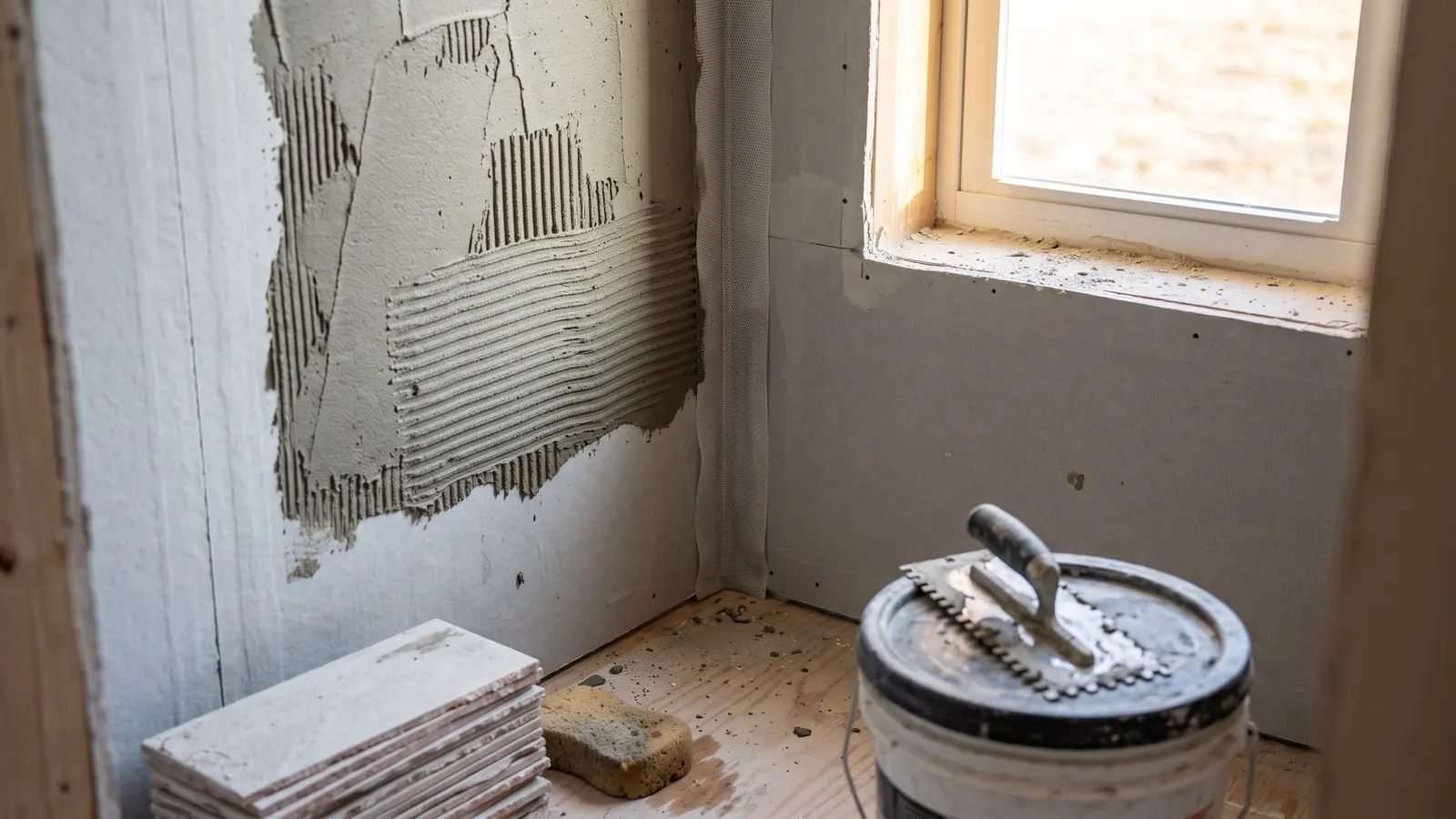
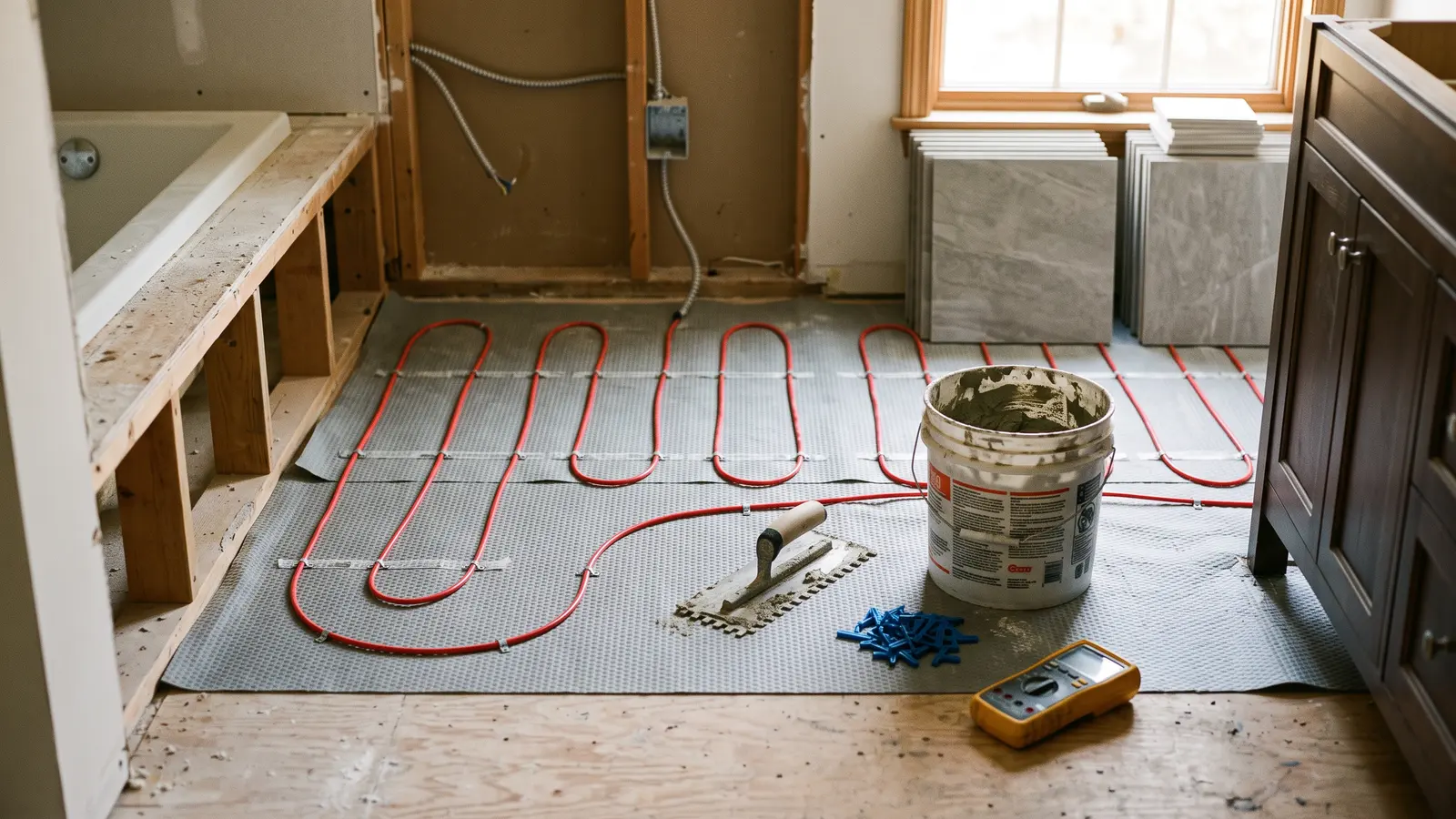
Inside Jim and Allie's house, Kevin finds Bill — Jim's brother — who has traveled from New Jersey to install tile underlayment in their bathroom. Family members doing skilled trade work during a rebuild is both heartwarming and practical. Bill clearly knows what he's doing, and Kevin steps in to help with waterproofing around the shower window.
Tile Underlayment: Why Schluter Matters
The product partner for this segment is Schluter Systems, and if you've tiled a bathroom in the last decade, you probably know the name. Schluter's KERDI membrane and DITRA uncoupling system have become the industry standard for waterproofing tile installations — for good reason.
The old-school approach to waterproofing a shower was a hot-mopped mud bed with a PVC liner — effective but labor-intensive and unforgiving if you got it wrong. Schluter's approach uses a thin waterproof membrane that bonds directly to the substrate and to the tile above it. It's faster to install, more forgiving of minor imperfections, and provides a continuous waterproof barrier.
The critical detail Bill and Kevin are working on — waterproofing around the shower window — is where most bathroom leaks start. Any penetration through a waterproof membrane is a potential failure point. Schluter makes specific components for corners, pipes, and window transitions that overlap and seal each joint. It's fussy work, but the alternative is water getting behind your tile and into your wall framing, which in a house that already survived a flood would be an irony nobody needs.
Alternatives to Schluter include Custom Building Products' RedGard (a liquid-applied membrane) and Laticrete HydroBan. Each has pros and cons: liquid membranes are arguably easier for DIYers but require careful attention to mil thickness; sheet membranes like Schluter's are more consistent but require precise cutting and seaming.
Roofing: The Six-Nail Standard
Up in North Asheville, Kevin meets father-son roofers JD and Jayden Reed of JD's Roofing and Repair, who are shingling Matt and Melinda's newly repaired roof. This is the roof that had multiple trees punched through it, so "newly repaired" is doing a lot of work in that sentence.
Why Six Nails Instead of Four?
JD explains that they use six nails per shingle instead of the standard four-nail pattern. This is the segment where you might learn something that changes how you think about your own roof.
The standard building code requires four nails per shingle in most regions. But in high-wind zones — and after Helene, Western North Carolina qualifies — six nails provide significantly better wind resistance. The numbers are compelling: a four-nail pattern typically resists winds up to 60-80 mph, while a six-nail pattern can handle 110-130 mph. The additional two nails add maybe $50-100 in materials to an entire roof but dramatically increase the shingle's ability to stay put when the wind is trying to peel it off.
If you're in a hurricane-prone area and your roofer isn't using six nails, ask why. If the answer is "it's not required," find a new roofer. The Reeds are doing this by choice and experience, and that's exactly the kind of contractor you want on your roof.
Chimney Flashing
Kevin heads up to the roof to meet Jayden, who demonstrates chimney flashing against the brick. This is where roofing meets our old friend the chimney from Episode 3. Flashing is the metal transition between the roof surface and the chimney, and it's one of the most common leak points on any house. Step flashing (individual pieces woven into each course of shingles) combined with counter-flashing (set into the chimney mortar joints) creates a shingle-like overlapping system that directs water away from the joint.
Getting flashing right is an art. Getting it wrong means water in your attic every time it rains, which then becomes water in your ceiling, which then becomes an argument about whose job it was to check the flashing.
Deck Rot: The Enemy Beneath
In East Asheville, Kevin and builder Will Nicholson discover a problem at Paula's house that every homeowner dreads: rot under the back door. While removing Paula's old deck, Will found compromised wood below the threshold. Together they remove the rot, reinforce the frame, and replace the damaged boards.
Deck rot is rarely a surface problem. By the time you can see it, the damage has usually spread deeper than you expect — into the rim joist, the sill plate, even the subfloor. The key lesson: when you find rot, don't just patch what's visible. Dig until you find solid wood, then build back from there. Will's approach of reinforcing the frame is textbook — you're not just replacing the damaged piece, you're ensuring the structure around it can support what goes on top.
Also worth noting: Paula's making design choices now that the drywall is up — paint, wallpaper, flooring. This is the fun part that everyone thinks about when they imagine a renovation. The preceding three episodes of demo, framing, plumbing, and electrical? That's the part nobody Instagram-stories.
DIY Confidence Scale: Episode 4
- Tile underlayment/waterproofing: Intermediate to Advanced. Doable if you take the time to learn the system, but shower waterproofing failures are expensive and invisible until they're not. Watch about ten hours of YouTube first. I'm serious.
- Roofing (shingling): Hire a Professional. It's not that the work is impossibly complex — it's that you're on a roof, and falling off a roof is the leading cause of residential construction fatalities. Also, your warranty depends on proper installation.
- Deck rot repair: Intermediate. This is one of those jobs where the diagnosis is harder than the fix. If you can identify the extent of the damage and aren't dealing with structural members, it's a satisfying weekend project.
Additional Resources
- This Old House — S47 E4 Official Page
- Watch Episode 4 on PBS
- Schluter Systems (tile waterproofing)
- JD's Roofing and Repair
- GAF Roofing Materials
- Biltmore Estate
- Shingle Nailing Guide: Placement, Patterns & High Wind Specs
Next time: FEMA clears damaged trees in North Asheville, Mark tours an historic inn, and building science experts show up to air-seal Paula's house — which, if you read our Episode 2 coverage, you know is a topic close to our hearts. Kevin Helper Scorecard update: 3 for 4 episodes. The man is on a streak. Piper Watch remains active.
The weekly recap
Get each new recap the day it's posted.
Get each new This Old House and Ask This Old House recap by email, the day it's posted. No spam, unsubscribe anytime.
From the captions
Spotted on the job
Tools, materials, and techniques the episode actually showed or discussed. Names stay generic unless the episode said a brand. A name links to an Amazon search only when it is something a person could buy.
As an Amazon Associate, This Old Recap earns from qualifying purchases.
Material
DIY-friendly
tile waterproof board
Amazon search for tile waterproof board (opens in a new tab)
Bill and Kevin installed tile waterproof board around a shower window.
Material
DIY-friendly
thinset
Amazon search for thinset (opens in a new tab)
Bill mixed thinset and used it to embed waterproof fabric and set the board.
Tool
DIY-friendly
notched trowel
Amazon search for notched trowel (opens in a new tab)
Bill used a notched trowel to spread thinset for the board and membrane.
Material
DIY-friendly
waterproof fabric
Amazon search for waterproof fabric (opens in a new tab)
Bill bonded waterproof fabric to the window and seams with caulking and embedded it in thinset.
Material
Pro-only
drip edge
The roofing crew installed drip edge as part of the new roof system.
Technique
Pro-only
six-nail application
Jayden showed Kevin the six-nail application to improve shingle uplift resistance.
Material
Pro-only
step flashing
Jayden installed step flashing where the roof intersects the sidewall.
Technique
Pro-only
kick-out diverter
Jayden made a kick-out diverter from flashing to direct roof water into the gutter.
Keep reading
Related recaps
Also from the Carolina Comeback
This Old House · S47 E6
This Old House S47 E6: High Schoolers Building Homes, Updated Electrical Codes, and Tom's Antique Vanity Gambit
Also from the Carolina Comeback
This Old House · S47 E2
This Old House S47 E2: Why the Mountains Flooded and the Slow, Muddy Work of Starting Over
Also about Tiling
This Old House · S47 E18